




DEFINITON Trial Released by EuroPCR 2020
CBSMD | Jun 28,2020
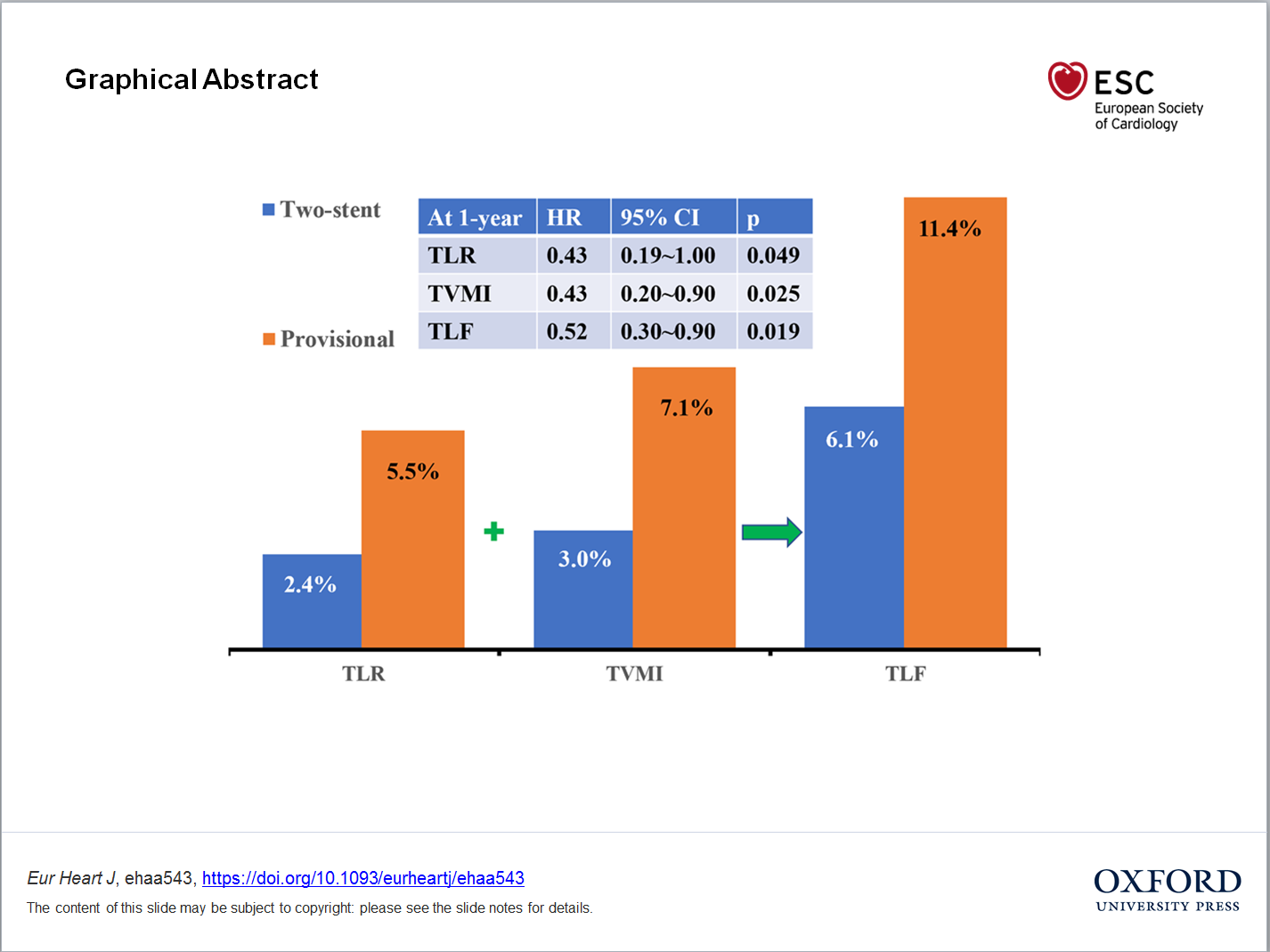
Multicentre, Randomized Trial Comfirms Two-stent Approach Improves Clinical Outcomes Compared with Pro...
Breaking News! Latest Research From Professor Shao-liang Chen 's Team, Published in The New England Journal of Medicine
CBSMD丨Oct 13,2026
Munich, Germany - The 2026 annual congress of the European Society of Cardiology (ESC 2026) opened in Munich, running from August 28 to 31 local time. Professor Shao-liang Chen of Nanjing First Hospital, together with his team, was invited to present the results of the clinical trial PADN-HF-PH during the highly anticipated “Headlines in heart failure”, known for its high academic value. The study was simultaneously accepted by The New England Journal of Medicine (NEJM, impact factor 84.5). Professor Shao-liang Chen of Nanjing First Hospital (Nanjing Hospital Affiliated to Nanjing Medical University), Academician of the Chinese Academy of Engineering Yaling Han of the General Hospital of Northern Theater Command, and Professor Gregg Stone of Mount Sinai Hospital from the United States are co-corresponding authors. Professor Hang Zhang of Nanjing First Hospital (Nanjing Hospital Affiliated to Nanjing Medical University), Professor Qiguang Wang and Professor Ming Liang of the General Hospital of Northern Theater Command are co-first authors. A landmark breakthrough in the diagnosis and treatment of pulmonary hypertension and heart failure has been made.

Pulmonary hypertension associated with left heart disease (PH-LHD) is the most common type of pulmonary hypertension in clinical practice, accounting for 65% to 80% of adult patients with pulmonary hypertension. In addition, 62% to 73% of HFrEF patients and 46% to 83% of HFpEF patients have concomitant PH, indicating a high prevalence of PH across all types of heart failure patients. It is widely present in patients with various forms of heart failure. These patients typically develop the condition secondary to heart failure and have a poor prognosis, with extremely high risks of readmission and death. However, to date, there are no globally approved drugs or interventional therapies specifically for PH-LHD, and this field has long been called “no man's land" in cardiovascular medicine.

The PADN-HF-PH study is a randomized controlled clinical trial conducted in patients with pulmonary hypertension associated with left heart disease (PH-LHD), enrolling a total of 264 patients. It aimes to evaluate the safety and clinical benefits of adding pulmonary artery denervation (PADN) to guideline-directed medical therapy (GDMT). The study provides new interventional treatment evidence for PH-LHD, a long-standing clinical challenge that has lacked targeted therapies.
PADN-HF-PH is a multicenter, randomized controlled trial conducted at 25 centers in China, enrolling 264 patients with pulmonary hypertension associated with left heart disease (PH-LHD) complicated by heart failure. It was primarily designed to evaluate the safety and efficacy of PADN in treating PH-LHD. This study is a prospective, multicenter, randomized controlled registrational clinical trial. Eligible patients with pulmonary hypertension associated with left heart disease and heart failure were randomized in a 1:1 ratio into two groups, receiving either pulmonary artery denervation (PADN) combined with guideline-directed medical therapy or medical therapy alone.
The primary outcome was clinical worsening as of the last follow-up, defined as a composite endpoint consisting of death, heart or lung transplantation, hospitalization for heart failure, worsening heart failure in outpatients, or a reduction in 6-minute walk distance.
The 264 patients with PH-LHD were randomly divided into two groups: 134 patients received pulmonary artery denervation (PADN) combined with guideline-directed medical therapy (GDMT), while 130 patients received GDMT alone. The median follow-up duration was 338 days.
Follow-up results showed that the 2-year incidence of clinical worsening was 25.7% in the PADN-plus-medication group, compared with 51.5% in the medication-only group, with a hazard ratio of 0.49 (95% confidence interval 0.30–0.82, P=0.006). PADN reduced the risk of the 2-year composite clinical worsening endpoint by 51%, and the benefit remained robust after excluding the 6-minute walk distance functional indicator. Meanwhile, the combined treatment significantly reduced the risk of clinical worsening at 6 months and 1 year, sustained improvements in the 6-minute walk distance and KCCQ quality-of-life scores, and effectively improved exercise tolerance and quality of life.

PADN Demonstrates Good Long-Term Efficacy and Safety in Treating PH-LHD, a Highly Promising Therapeutic Approach
In terms of safety, only a small number of puncture-site hematomas occurred, with no serious procedure-related complications, and the overall incidence of adverse events was similar between the two groups. In summary, PADN demonstrates good safety and long-term efficacy in treating pulmonary hypertension associated with left heart disease (PH-LHD), making it a highly promising therapeutic approach for clinical application.

Over Decade of Dedication: China's Original PADN Technology Moves From "Experimental Exploration" to "Standard Treatment Candidate," Lighting Hope for Millions Worldwide.
After more than a decade of persistent effort, the PADN technology — a Chinese original innovation — has advanced from "experimental exploration" to a "standard treatment candidate," lighting up therapeutic hope for millions of patients worldwide. It also marks an important step for Chinese original technology to go global with high-quality clinical evidence and enter the core stage of global medicine. As Chinese original technology stands on the top of this“no man’s land”, what it protects is not only every heartbeat, but also shows the confidence of medical solution from China to the world.



http://www.cbsmd.cn Contact us by cbs@cbsmd.cn
Copyright ⓒ CBSMD Nanjing China. All rights reserved.
