CBS 2019


CBSMD教育中心


首页


CBS 2019
关于CBS


会议通知
会议组织
主办单位
南京市心血管病医院
亚洲分叉病变俱乐部
南京医科大学附属南京医院
南京市第一医院医学发展医疗救助基金会
协办单位
中华医学会心血管病学分会
国家卫生健康委能力建设和继续教育心血管病学专家委员会(CBCEC)
美国心血管造影和介入学会
亚洲心脏学会
北京合众关爱心脏健康基金会
联系我们
境内代表注册管理:
彭红娟 : +86-13913895477
徐海梅 :+86-13914736846
 cbsnj@cbsmd.cn
境外代表注册管理:
林玲 : +86 (25) 52271398
+86-13951884596
cbs@cbsmd.cn
病例征集管理:
赵莹莹 :+86-13815408517
sub@cbsmd.cn
地址:
 江苏省南京市秦淮区长乐路68号,南京市心血管病医院9号楼905区心内科办公室
 210006


主席团
主席团
大会主席
联合主席


教育中心
教育中心
• 线上教育 ( 注册后可使用个人定义界面搜集科研图书馆文献、下载教育资源、参与在线病例讨论。)
• 教育资源


• 科研动态


科研图书馆
科研图书馆


科研文章
> 急性冠脉综合征
> 动脉粥样硬化性心血管疾病
> 分叉支架
> 心脏肿瘤科
> 充血性心力衰竭
> 双重抗血小板治疗持续时间
> 药物涂层球囊
> 血流储备分数
> 血管内超声指导
> 光学相关断层扫描
> 肺动脉高压
> 旋磨术
> 血流动力学与动脉粥样硬化
> 左主干支架
> 经导管主动脉瓣置换
> 经皮左心耳封堵
> 二尖瓣/三尖瓣瓣膜
> 推荐文献
荐读文献
Management of Acute Myocardial Infarction During the COVID-19 Pandemic
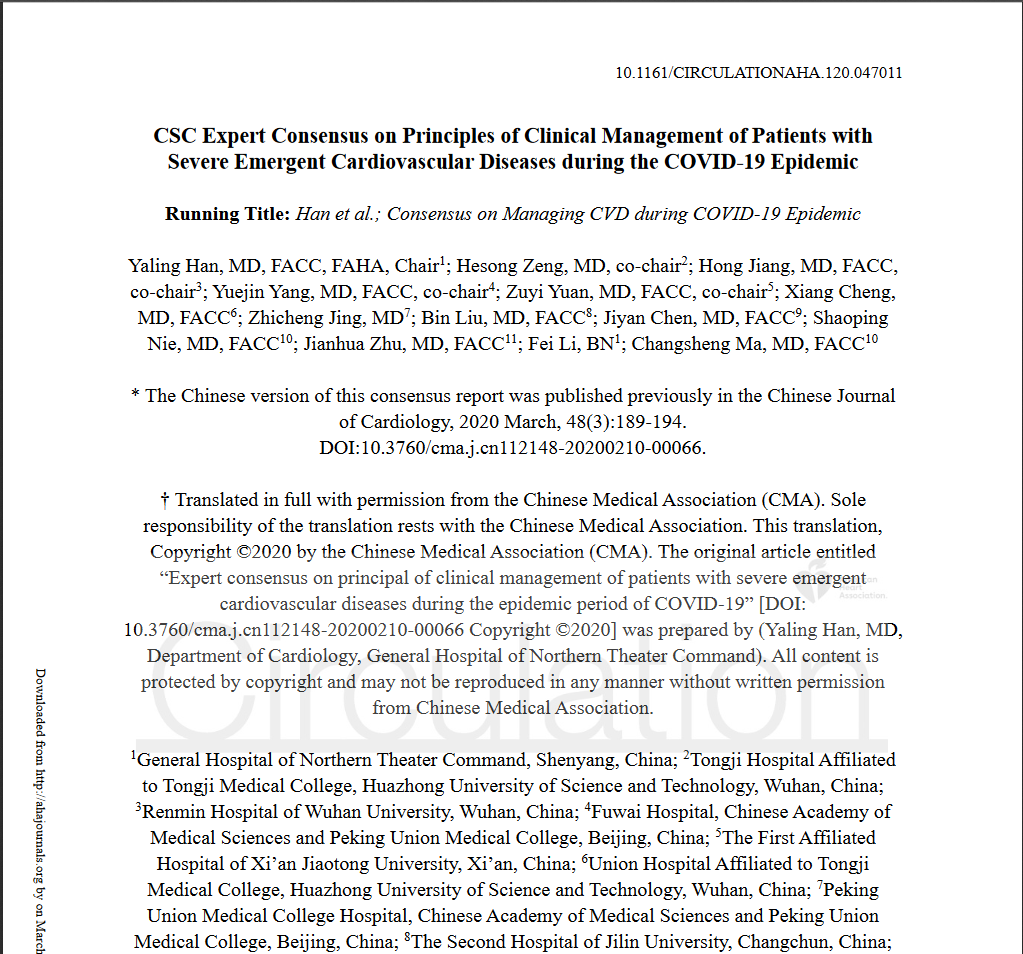
CSC Expert Consensus on Principles of Clinical Management of Patients with Severe Emergent Cardiovascular Diseases during the COVID-19 Epidemic
ACC临床简报:新型冠状病毒对心脏的影响(2019-nCoV)
SCAI Expert Consensus Statement Update on Best Practices for Transradial Angiography and Intervention
经皮左心耳封堵
Original Research18 March 2021
JOURNAL:Clin Infect Dis. Article Link
D del Val, M Abdel-Wahab, J Rodés-Cabau et al. Keywords: TAVR; infective endocarditis; prosthetic valve endocarditis
BACKGROUND - Procedural improvements combined with the contemporary clinical profile of patients undergoing transcatheter aortic valve replacement (TAVR) may have influenced the incidence and outcomes of infective endocarditis (IE) following TAVR. We aimed to determine the temporal trends, characteristics, and outcomes of IE post-TAVR.
METHODS - Observational study including 552 patients presenting definite IE post-TAVR. Patients were divided in 2 groups according to the timing of TAVR (historical cohort [HC]: before 2014; contemporary cohort [CC]: after 2014).
RESULTS - Overall incidence rates of IE were similar in both cohorts (CC vs HC: 5.45 vs 6.52 per 1000 person-years; P = .12), but the rate of early IE was lower in the CC (2.29‰ vs 4.89‰, P < .001). Enterococci were the most frequent microorganism. Most patients presented complicated IE ( CC: 67.7%; HC: 69.6%; P = .66), but the rate of surgical treatment remained low (CC: 20.7%; HC: 17.3%; P = .32). The CC exhibited lower rates of in-hospital acute kidney injury (35.1% vs 44.6%; P = .036) and in-hospital (26.6% vs 36.4%; P = .016) and 1-year (37.8% vs 53.5%; P < .001) mortality. Higher logistic EuroScore, Staphylococcus aureus etiology, and complications (stroke, heart failure, and acute renal failure) were associated with in-hospital mortality in multivariable analyses (P < .05 for all).
CONCLUSIONS - Although overall IE incidence has remained stable, the incidence of early IE has declined in recent years. The microorganism, high rate of complications, and very low rate of surgical treatment remained similar. In-hospital and 1-year mortality rates were high but progressively decreased over time.


 English









 CBS 2019
 CBS 2019 主席团
 教育中心
教育中心 科研动态
科研动态


