CBS 2019


CBSMD教育中心


HOME


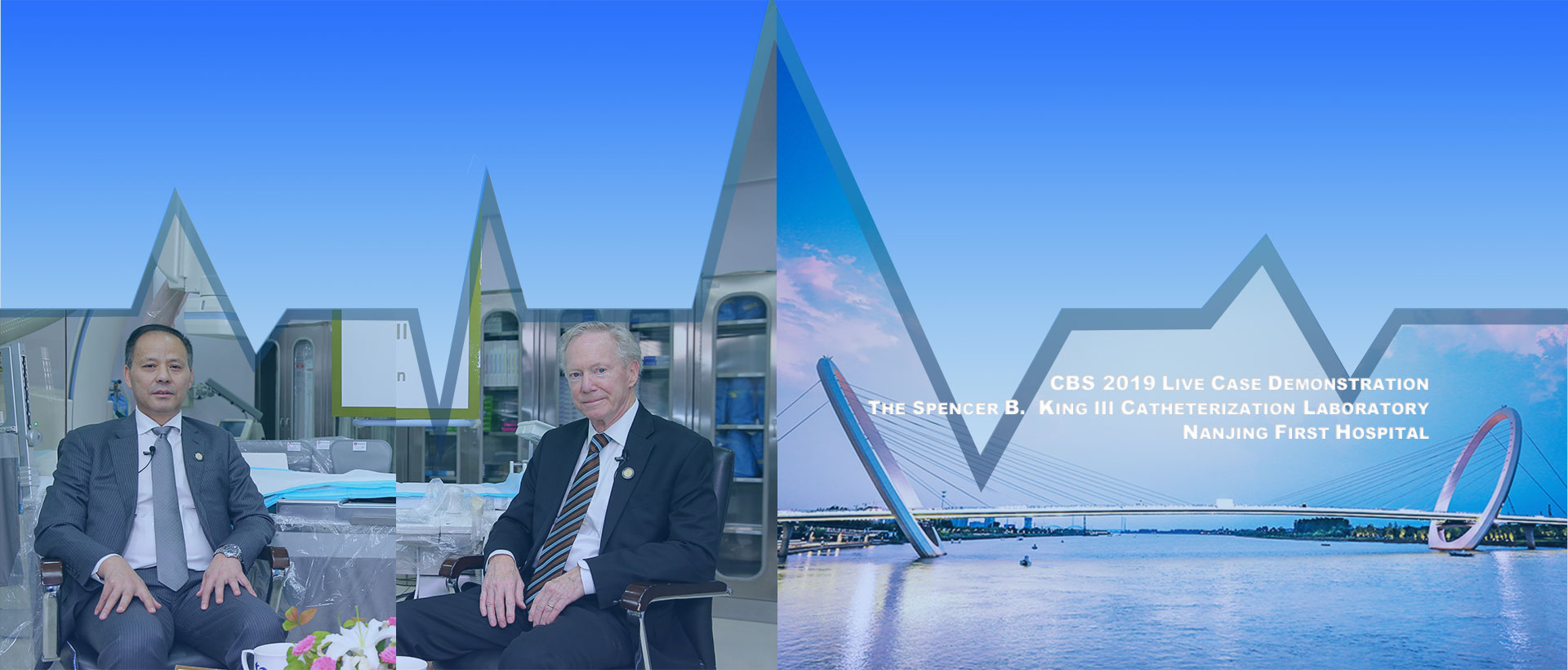
CBS 2019
At CBS


General Information
Association and Affiliations
Organized by
Nanjing Heart Center
Asian Bifurcation Club (ABC)
Nanjing First Hospital, Nanjing Medical University
Co-organized by
Chinese Society of Cardiology (CSC)
Capacity Building and Continuing Education Center,National Health and Family Planning Commission (CBCEC)
American Society for Cardiovascular Angiography and Interventions (SCAI)
Asian Heart Society (AHS)
Contact Us
Registration Administration of Domestic Representatives
Hongjuan Peng : +86-13913895477
Haimei Xu +86-13914736846
 cbsnj@cbsmd.cn
Registration Administration of Overseas Representatives
Ling Lin : +86 (25) 52271398
+86-13951884596
cbs@cbsmd.cn
Management of Challenging Cases
Yingying Zhao :+86-13815408517
sub@cbsmd.cn
Address
 CBS2019 Congress Secretariat, Nanjing First Hospital, Building No.9 68# Changle Road, Nanjing, China
 210006


FACULTY
FACULTY
General Chairman
Congress Chairman


Education Center
Education Center
• Online Education (For more customized user interface with self-defined collection of research papers and education resources.)
• CBS Education Resource


• CBSMD Scientific Library


SCIENTIFIC LIBRARY
SCIENTIFIC LIBRARY


Research Paper
> Acute Coronary Syndrom
> ASCVD Prevention
> Bifurcation Stenting
> Cardio-Oncology
> Congestive Heart Failure
> DAPT Duration
> Drug Coated Balloon
> Fractional Flow Reserve
> IVUS Guidance
> Optical Coherence Tomography
> Pulmonary Hypertension
> Rotational Atherectomy
> Shear Stress
> Stenting Left Main
> Transcatheter Aortic Valve Replacement
> Percutaneous LAA Occlusion
> Mitral/Tricuspid Valvular Disease
> Other Relevant Articles
Recommended Paper
Management of Acute Myocardial Infarction During the COVID-19 Pandemic
COVID-19 and Thrombotic or Thromboembolic Disease: Implications for Prevention, Antithrombotic Therapy, and Follow-up
CSC Expert Consensus on Principles of Clinical Management of Patients with Severe Emergent Cardiovascular Diseases during the COVID-19 Epidemic
ACC Clinical Bulletin Focuses on Cardiac Implications of Coronavirus (COVID-19)
Rotational Atherectomy
Clinical TrialVolume 73, Issue 2, January 2019
JOURNAL:J Am Coll Cardiol. Article Link
Driessen RS, Danad I, Stuijfzand WJ et al. Keywords: Invasive Cardiovascular Angiography and Intervention; Noninvasive Imaging; Atherosclerotic Disease (CAD/PAD); Interventions and Coronary Artery Disease; Interventions and Imaging; Angiography; Computed Tomography; Nuclear Imaging
BACKGROUND - Fractional flow reserve (FFR) computation from coronary computed tomography angiography (CTA) datasets (FFRCT) has emerged as a promising noninvasive test to assess hemodynamic severity of coronary artery disease (CAD), but has not yet been compared with traditional functional imaging.
OBJECTIVES - The purpose of this study was to evaluate the diagnostic performance of FFRCT and compare it with coronary CTA, single-photon emission computed tomography (SPECT), and positron emission tomography (PET) for ischemia diagnosis.
METHODS - This subanalysis involved 208 prospectively included patients with suspected stable CAD, who underwent 256-slice coronary CTA, 99mTc-tetrofosmin SPECT, [15O]H2O PET, and routine 3-vessel invasive FFR measurements. FFRCT values were retrospectively derived from the coronary CTA images. Images from each modality were interpreted by core laboratories, and their diagnostic performances were compared using invasively measured FFR ≤0.80 as the reference standard.
RESULTS - In total, 505 of 612 (83%) vessels could be evaluated with FFRCT. FFRCT showed a diagnostic accuracy, sensitivity, and specificity of 87%, 90%, and 86% on a per-vessel basis and 78%, 96%, and 63% on a per-patient basis, respectively. Area under the receiver-operating characteristic curve (AUC) for identification of ischemia-causing lesions was significantly greater for FFRCT (0.94 and 0.92) in comparison with coronary CTA (0.83 and 0.81; p < 0.01 for both) and SPECT (0.70 and 0.75; p < 0.01 for both), on a per-vessel and -patient level, respectively. FFRCT also outperformed PET on a per-vessel basis (AUC 0.87; p < 0.01), but not on a per-patient basis (AUC 0.91; p = 0.56). In the intention-to-diagnose analysis, PET showed the highest per-patient and -vessel AUC followed by FFRCT (0.86 vs. 0.83; p = 0.157; and 0.90 vs. 0.79; p = 0.005, respectively).
CONCLUSIONS - In this study, FFRCT showed higher diagnostic performance than standard coronary CTA, SPECT, and PET for vessel-specific ischemia, provided coronary CTA images were evaluable by FFRCT, whereas PET had a favorable performance in per-patient and intention-to-diagnose analysis. Still, in patients in whom 3-vessel FFRCT could be analyzed, FFRCT holds clinical potential to provide anatomic and hemodynamic significance of coronary lesions.


 中 文
中 文







 CBS 2019
 CBS 2019 FACULTY
 Education Resource
 CBSMD Scientific Library


