CBS 2019


CBSMD教育中心


HOME


CBS 2019
At CBS


General Information
Association and Affiliations
Organized by
Nanjing Heart Center
Asian Bifurcation Club (ABC)
Nanjing First Hospital, Nanjing Medical University
Co-organized by
Chinese Society of Cardiology (CSC)
Capacity Building and Continuing Education Center,National Health and Family Planning Commission (CBCEC)
American Society for Cardiovascular Angiography and Interventions (SCAI)
Asian Heart Society (AHS)
Contact Us
Registration Administration of Domestic Representatives
Hongjuan Peng : +86-13913895477
Haimei Xu +86-13914736846
 cbsnj@cbsmd.cn
Registration Administration of Overseas Representatives
Ling Lin : +86 (25) 52271398
+86-13951884596
cbs@cbsmd.cn
Management of Challenging Cases
Yingying Zhao :+86-13815408517
sub@cbsmd.cn
Address
 CBS2019 Congress Secretariat, Nanjing First Hospital, Building No.9 68# Changle Road, Nanjing, China
 210006


FACULTY
FACULTY
General Chairman
Congress Chairman


Education Center
Education Center
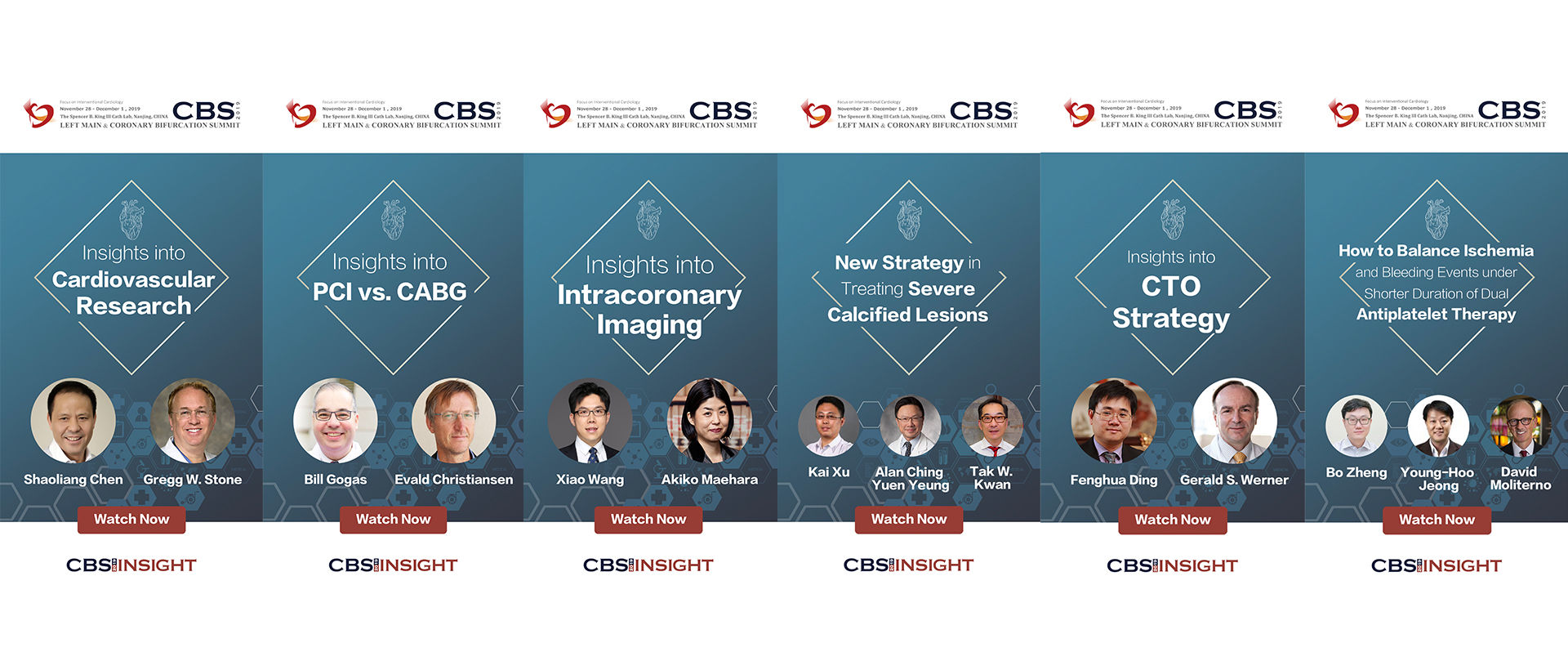
• Online Education (For more customized user interface with self-defined collection of research papers and education resources.)
• CBS Education Resource


• CBSMD Scientific Library


SCIENTIFIC LIBRARY
SCIENTIFIC LIBRARY


Research Paper
> Acute Coronary Syndrom
> ASCVD Prevention
> Bifurcation Stenting
> Cardio-Oncology
> Congestive Heart Failure
> DAPT Duration
> Drug Coated Balloon
> Fractional Flow Reserve
> IVUS Guidance
> Optical Coherence Tomography
> Pulmonary Hypertension
> Rotational Atherectomy
> Shear Stress
> Stenting Left Main
> Transcatheter Aortic Valve Replacement
> Percutaneous LAA Occlusion
> Mitral/Tricuspid Valvular Disease
> Other Relevant Articles
Recommended Paper
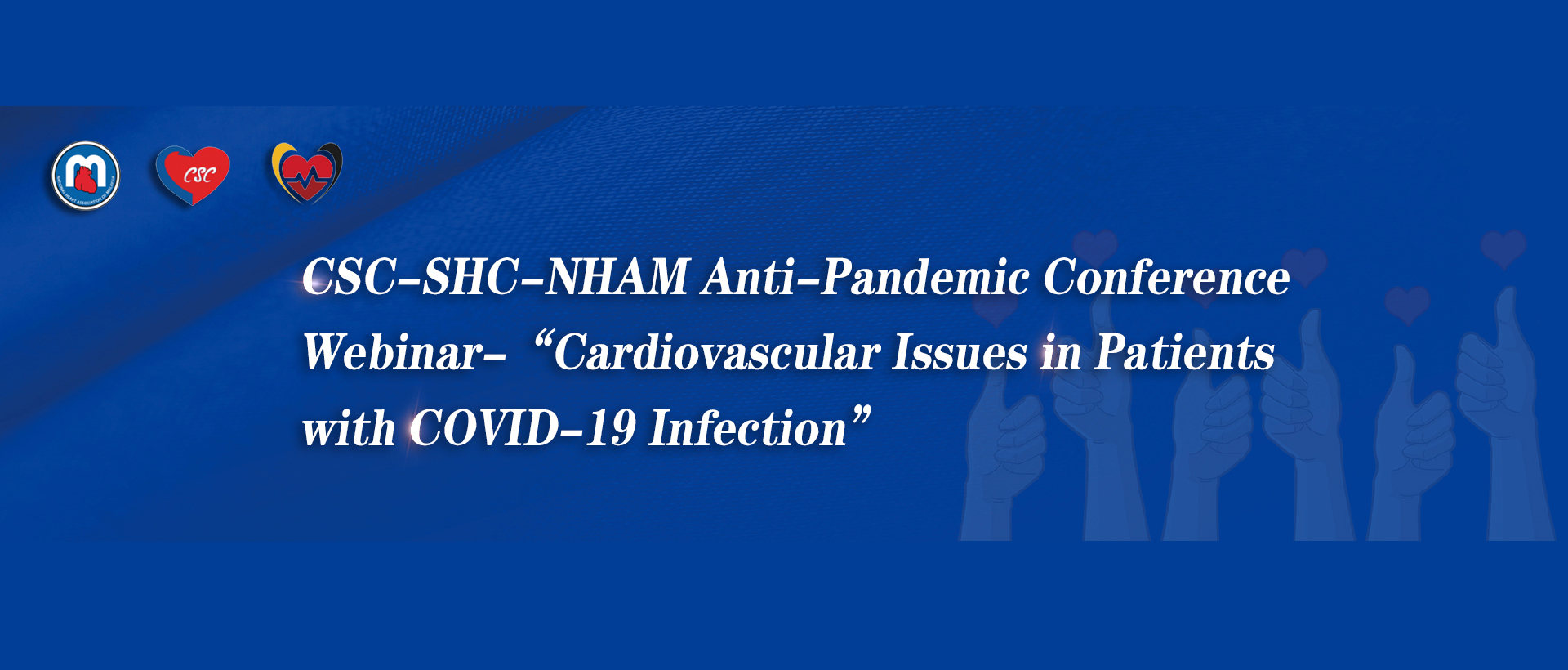
Management of Acute Myocardial Infarction During the COVID-19 Pandemic
COVID-19 and Thrombotic or Thromboembolic Disease: Implications for Prevention, Antithrombotic Therapy, and Follow-up
CSC Expert Consensus on Principles of Clinical Management of Patients with Severe Emergent Cardiovascular Diseases during the COVID-19 Epidemic
ACC Clinical Bulletin Focuses on Cardiac Implications of Coronavirus (COVID-19)
药物涂层球囊
Clinical Trial2019 Jan 3.[Epub ahead of print]
JOURNAL:Clin Res Cardiol. Article Link
Moalem K, Baber U, Mehran R et al. Keywords: Bleeding; DAPT; Disruption; Ischemic; Non-compliance
BACKGROUND - The disruption of dual antiplatelet therapy (DAPT) due to non-compliance or bleeding is known to significantly increase the risk of adverse outcomes after percutaneous coronary intervention (PCI). However, it is currently unknown if there are differences in the predictors and clinical impact of disruption due to non-compliance compared with bleeding.
METHODS - The patterns of non-adherence to antiplatelet regimens in stented patients (PARIS) registry was an international, multicenter prospective study of PCI patients discharged on DAPT (aspirin + a P2Y12 receptor). We analyzed the incidence, patient characteristics, predictors, and outcomes in patients with DAPT disruption due to non-compliance as compared to DAPT disruption due to bleeding in the PARIS registry. Predictors of non-recommended disruption and bleeding disruption were assessed using logistic regression. Risks associated with disruption on major adverse cardiac events (MACE, a composite of cardiac death, definite or probable stent thrombosis, spontaneous myocardial infarction, and target lesion revascularization) were analyzed using time-updated Cox regression over 2-year follow-up.
RESULTS - Out of 5018 patients, the rate of non-compliant DAPT disruption was 1.6% at 30 days (n = 79), 6.5% at 12 months (n = 328), and 9.1% at 2 years from PCI (n = 457). The rate of bleeding DAPT disruption was 0.6% at 30 days (n = 32), 3.1% at 12 months (n = 156), and 4.6% at 2 years (n = 229). Multivariate predictors of non-compliant disruption included female gender, history of smoking, acute coronary syndrome, and US patients which were associated with greater risk; and dyslipidemia and discharge PPI which were associated with lower risk. Multivariate predictors of bleeding disruption included older age, prior MI, and discharge warfarin which were associated with greater risk; and US region and intervention to the LAD which were associated with lower risk. Non-compliant disruption was associated with a significantly greater risk for MACE (HR 1.73, 95% CI 1.17-2.54, p = 0.006) and spontaneous myocardial infarction (HR 2.93, 95% CI 1.85-4.65, p < 0.001). Bleeding disruption was associated with a significantly greater risk for all-cause death (HR 1.93, 95% CI 1.22-3.08, p = 0.005).
CONCLUSION - Approximately 1 in 10 patients disrupts DAPT due to non-compliance and 1 in 20 disrupts DAPT due to bleeding. Disruption due to non-compliance resulted in higher risk for ischemic events and disruption due to bleeding had higher subsequent mortality. These data warrant efforts to focus on patient education in those at high risk of non-compliance.


 中 文
中 文






 CBS 2019
 CBS 2019 FACULTY
 Education Resource
 CBSMD Scientific Library


