CBS 2019


CBSMD教育中心


HOME


CBS 2019
At CBS


General Information
Association and Affiliations
Organized by
Nanjing Heart Center
Asian Bifurcation Club (ABC)
Nanjing First Hospital, Nanjing Medical University
Co-organized by
Chinese Society of Cardiology (CSC)
Capacity Building and Continuing Education Center,National Health and Family Planning Commission (CBCEC)
American Society for Cardiovascular Angiography and Interventions (SCAI)
Asian Heart Society (AHS)
Contact Us
Registration Administration of Domestic Representatives
Hongjuan Peng : +86-13913895477
Haimei Xu +86-13914736846
 cbsnj@cbsmd.cn
Registration Administration of Overseas Representatives
Ling Lin : +86 (25) 52271398
+86-13951884596
cbs@cbsmd.cn
Management of Challenging Cases
Yingying Zhao :+86-13815408517
sub@cbsmd.cn
Address
 CBS2019 Congress Secretariat, Nanjing First Hospital, Building No.9 68# Changle Road, Nanjing, China
 210006


FACULTY
FACULTY
General Chairman
Congress Chairman


Education Center
Education Center
• Online Education (For more customized user interface with self-defined collection of research papers and education resources.)
• CBS Education Resource


• CBSMD Scientific Library


SCIENTIFIC LIBRARY
SCIENTIFIC LIBRARY


Research Paper
> Acute Coronary Syndrom
> ASCVD Prevention
> Bifurcation Stenting
> Cardio-Oncology
> Congestive Heart Failure
> DAPT Duration
> Drug Coated Balloon
> Fractional Flow Reserve
> IVUS Guidance
> Optical Coherence Tomography
> Pulmonary Hypertension
> Rotational Atherectomy
> Shear Stress
> Stenting Left Main
> Transcatheter Aortic Valve Replacement
> Percutaneous LAA Occlusion
> Mitral/Tricuspid Valvular Disease
> Other Relevant Articles
Recommended Paper
Management of Acute Myocardial Infarction During the COVID-19 Pandemic
COVID-19 and Thrombotic or Thromboembolic Disease: Implications for Prevention, Antithrombotic Therapy, and Follow-up
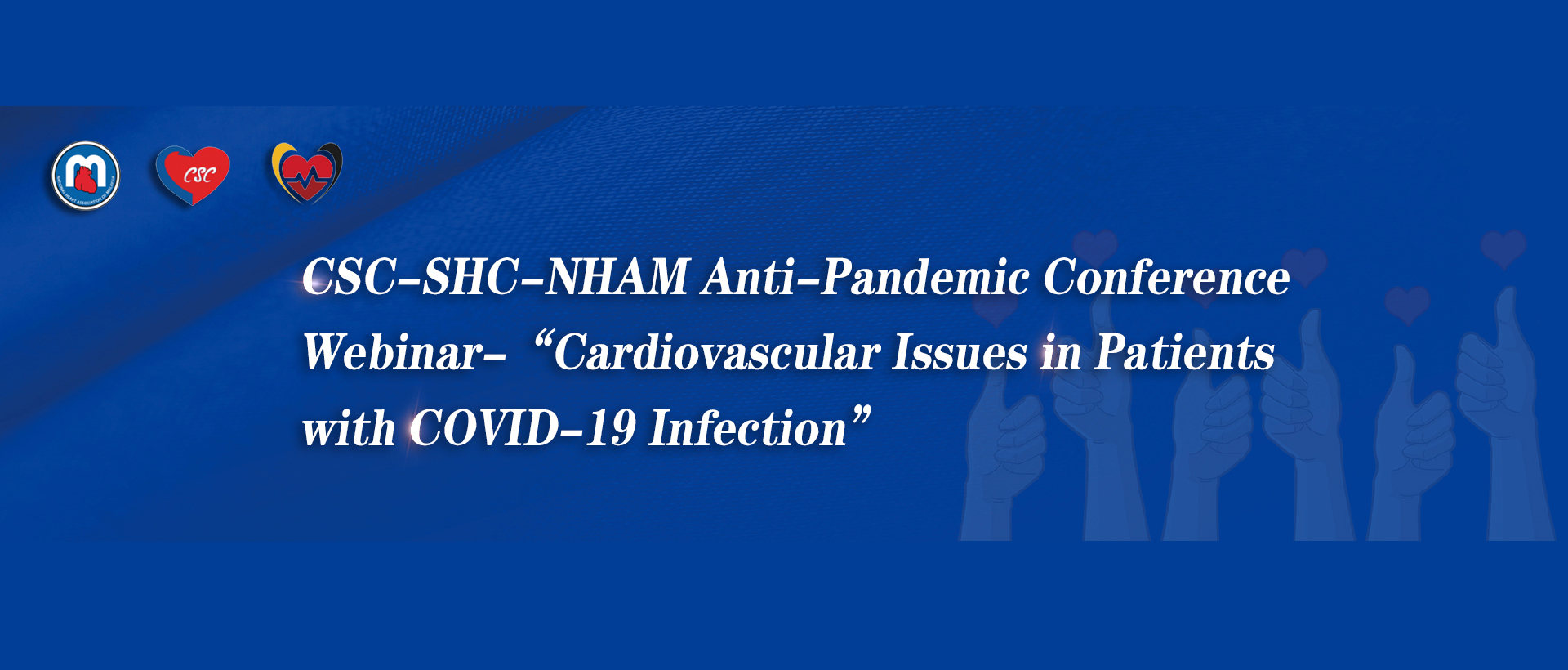
CSC Expert Consensus on Principles of Clinical Management of Patients with Severe Emergent Cardiovascular Diseases during the COVID-19 Epidemic
ACC Clinical Bulletin Focuses on Cardiac Implications of Coronavirus (COVID-19)
药物涂层球囊
Original Research2021 Dec 30.
JOURNAL:Eur J Heart Fail. Article Link
A Banerjee, L Pasea, S-C Chung et al. Keywords: HF; risk factors
BACKGROUND - Primary prevention strategies for heart failure(HF) have had limited success, possibly due to a wide range of underlying risk factors(RFs). Systematic evaluations of the prognostic burden and preventive potential across this wide range of risk factors are lacking.
OBJECTIVE - To estimate evidence, prevalence and co-occurrence for primary prevention and impact on prognosis of RFs for incident HF.
METHODS - We systematically reviewed trials and observational evidence of primary HF prevention across 92 putative aetiologic RFs for HF identified from US and European clinical practice guidelines. We identified 170 885 individuals aged ≥30 years with incident HF from 1997-2017, using linked primary and secondary care UK electronic health records(EHR) and rule-based phenotypes(ICD-10, Read Version 2, OPCS-4 procedure and medication codes) for each of 92 RFs.
RESULTS - Only 10/92 factors had high quality observational evidence for association with incident HF; 7 had effective RCT-based interventions for HF prevention(RCT-HF), and 6 for CVD prevention, but not HF(RCT-CVD), and the remainder had no RCT-based preventive interventions(RCT-0). We were able to map 91/92 risk factors to EHR using 5961 terms, and 88/91 factors were represented by at least one patient. In the 5 years prior to HF diagnosis, 44.3% had ≥4 RFs. By RCT evidence, the most common RCT-HF RFs were hypertension(48.5%), stable angina(34.9%), unstable angina(16.8%), myocardial infarction(15.8%), and diabetes(15.1%); RCT-CVD RFs were smoking(46.4%) and obesity(29.9%); and RCT-0 RFs were atrial arrhythmias(17.2%), cancer(16.5%),), heavy alcohol intake(14.9%). Mortality at 1 year varied across all 91 factors(lowest: pregnancy-related hormonal disorder 4.2%; highest: phaeochromocytoma 73.7%). Among new HF cases, 28.5% had no RCT-HF RFs and 38.6% had no RCT-CVD RFs. 15.6% had either no RF or only RCT-0 RFs.
CONCLUSIONS - 1 in 6 individuals with HF have no recorded RFs or RFs without trials. We provide a systematic map of primary preventive opportunities across a wide range of RFs for HF, demonstrating a high burden of co-occurrence and the need for trials tackling multiple RFs.


 中 文
中 文




 CBS 2019
 CBS 2019 FACULTY
 Education Resource
 CBSMD Scientific Library


