CBS 2019


CBSMD教育中心


HOME


CBS 2019
At CBS


General Information
Association and Affiliations
Organized by
Nanjing Heart Center
Asian Bifurcation Club (ABC)
Nanjing First Hospital, Nanjing Medical University
Co-organized by
Chinese Society of Cardiology (CSC)
Capacity Building and Continuing Education Center,National Health and Family Planning Commission (CBCEC)
American Society for Cardiovascular Angiography and Interventions (SCAI)
Asian Heart Society (AHS)
Contact Us
Registration Administration of Domestic Representatives
Hongjuan Peng : +86-13913895477
Haimei Xu +86-13914736846
 cbsnj@cbsmd.cn
Registration Administration of Overseas Representatives
Ling Lin : +86 (25) 52271398
+86-13951884596
cbs@cbsmd.cn
Management of Challenging Cases
Yingying Zhao :+86-13815408517
sub@cbsmd.cn
Address
 CBS2019 Congress Secretariat, Nanjing First Hospital, Building No.9 68# Changle Road, Nanjing, China
 210006


FACULTY
FACULTY
General Chairman
Congress Chairman


Education Center
Education Center
• Online Education (For more customized user interface with self-defined collection of research papers and education resources.)
• CBS Education Resource


• CBSMD Scientific Library


SCIENTIFIC LIBRARY
SCIENTIFIC LIBRARY


Research Paper
> Acute Coronary Syndrom
> ASCVD Prevention
> Bifurcation Stenting
> Cardio-Oncology
> Congestive Heart Failure
> DAPT Duration
> Drug Coated Balloon
> Fractional Flow Reserve
> IVUS Guidance
> Optical Coherence Tomography
> Pulmonary Hypertension
> Rotational Atherectomy
> Shear Stress
> Stenting Left Main
> Transcatheter Aortic Valve Replacement
> Percutaneous LAA Occlusion
> Mitral/Tricuspid Valvular Disease
> Other Relevant Articles
Recommended Paper
Management of Acute Myocardial Infarction During the COVID-19 Pandemic
COVID-19 and Thrombotic or Thromboembolic Disease: Implications for Prevention, Antithrombotic Therapy, and Follow-up
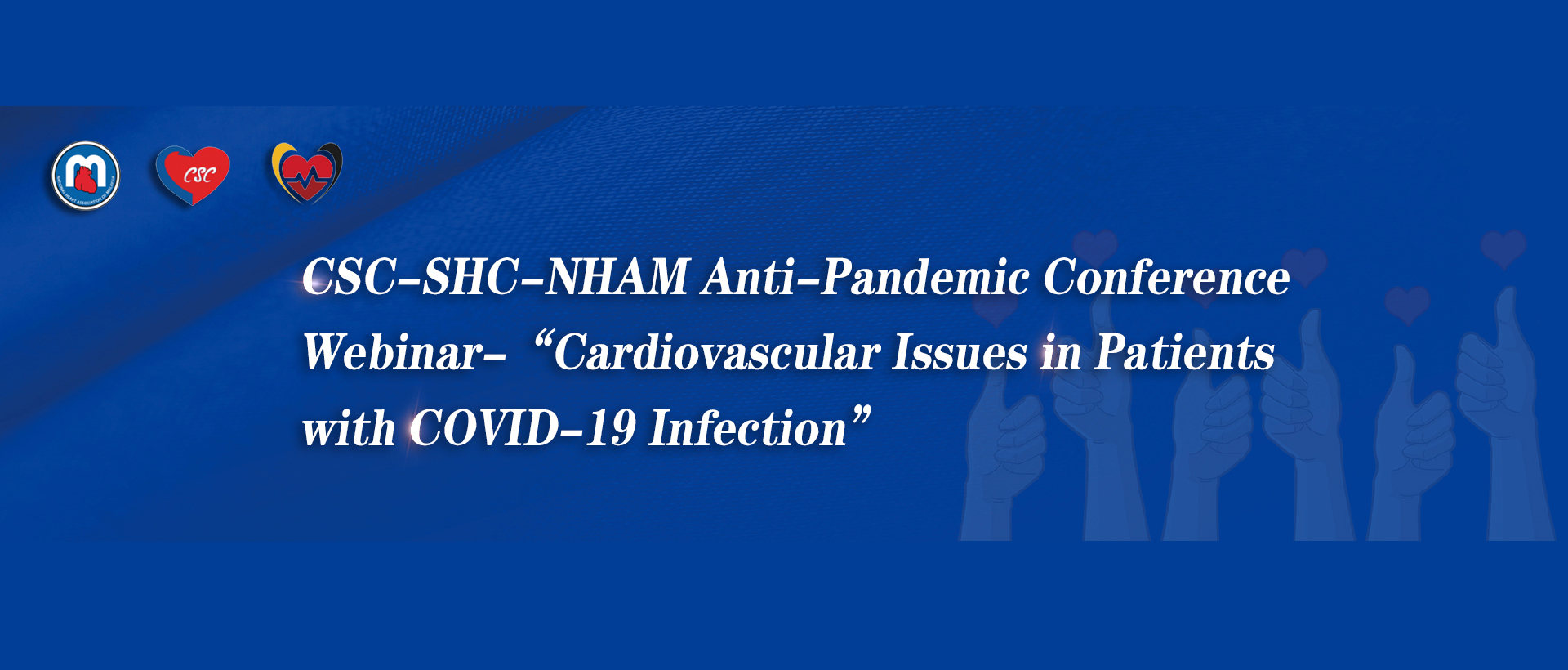
CSC Expert Consensus on Principles of Clinical Management of Patients with Severe Emergent Cardiovascular Diseases during the COVID-19 Epidemic
ACC Clinical Bulletin Focuses on Cardiac Implications of Coronavirus (COVID-19)
光学相关断层扫描
Review Article2018 Jun 12. [Epub ahead of print]
JOURNAL:Curr Probl Cancer. Article Link
Armanious MA, Mohammadi H, Khodor S et al. Keywords: Atherosclerosis; Autonomic dysfunction; Carotid artery stenosis; Radiation therapy
Radiation therapy (RT) plays a prominent role in the treatment of many cancers. With increasing use of RT and high overall survival rates, the risks associated with RT must be carefully considered. Of these risks, the cardiovascular and autonomic toxicities have been of significant concern. In fact, cardiovascular disease is the leading cause of nonmalignancy-related death in cancer survivors. The manifestations of radiation induced cardiac injury include the acute toxicities of myopericarditis and late toxicities including constrictive pericarditis, restrictive cardiomyopathy, coronary artery disease, valvular heart disease, heart failure, and conduction abnormalities. Neck and cranial RT have also been associated with significant long-term toxicities including accelerated occlusive carotid artery disease, autonomic dysfunction due to baroreceptor damage, and development of metabolic syndromes due to damage to the hypothalamic-pituitary axis. The clinical manifestations of radiation induced disease may not present until several years following the delivery of radiation. We review the adverse effects of RT on these organ systems and discuss risk reduction strategies that may effectively mitigate some of these adverse outcomes.


 中 文
中 文




 CBS 2019
 CBS 2019 FACULTY
 Education Resource
 CBSMD Scientific Library


