CBS 2019


CBSMD教育中心


HOME


CBS 2019
At CBS


General Information
Association and Affiliations
Organized by
Nanjing Heart Center
Asian Bifurcation Club (ABC)
Nanjing First Hospital, Nanjing Medical University
Co-organized by
Chinese Society of Cardiology (CSC)
Capacity Building and Continuing Education Center,National Health and Family Planning Commission (CBCEC)
American Society for Cardiovascular Angiography and Interventions (SCAI)
Asian Heart Society (AHS)
Contact Us
Registration Administration of Domestic Representatives
Hongjuan Peng : +86-13913895477
Haimei Xu +86-13914736846
 cbsnj@cbsmd.cn
Registration Administration of Overseas Representatives
Ling Lin : +86 (25) 52271398
+86-13951884596
cbs@cbsmd.cn
Management of Challenging Cases
Yingying Zhao :+86-13815408517
sub@cbsmd.cn
Address
 CBS2019 Congress Secretariat, Nanjing First Hospital, Building No.9 68# Changle Road, Nanjing, China
 210006


FACULTY
FACULTY
General Chairman
Congress Chairman


Education Center
Education Center
• Online Education (For more customized user interface with self-defined collection of research papers and education resources.)
• CBS Education Resource


• CBSMD Scientific Library


SCIENTIFIC LIBRARY
SCIENTIFIC LIBRARY


Research Paper
> Acute Coronary Syndrom
> ASCVD Prevention
> Bifurcation Stenting
> Cardio-Oncology
> Congestive Heart Failure
> DAPT Duration
> Drug Coated Balloon
> Fractional Flow Reserve
> IVUS Guidance
> Optical Coherence Tomography
> Pulmonary Hypertension
> Rotational Atherectomy
> Shear Stress
> Stenting Left Main
> Transcatheter Aortic Valve Replacement
> Percutaneous LAA Occlusion
> Mitral/Tricuspid Valvular Disease
> Other Relevant Articles
Recommended Paper
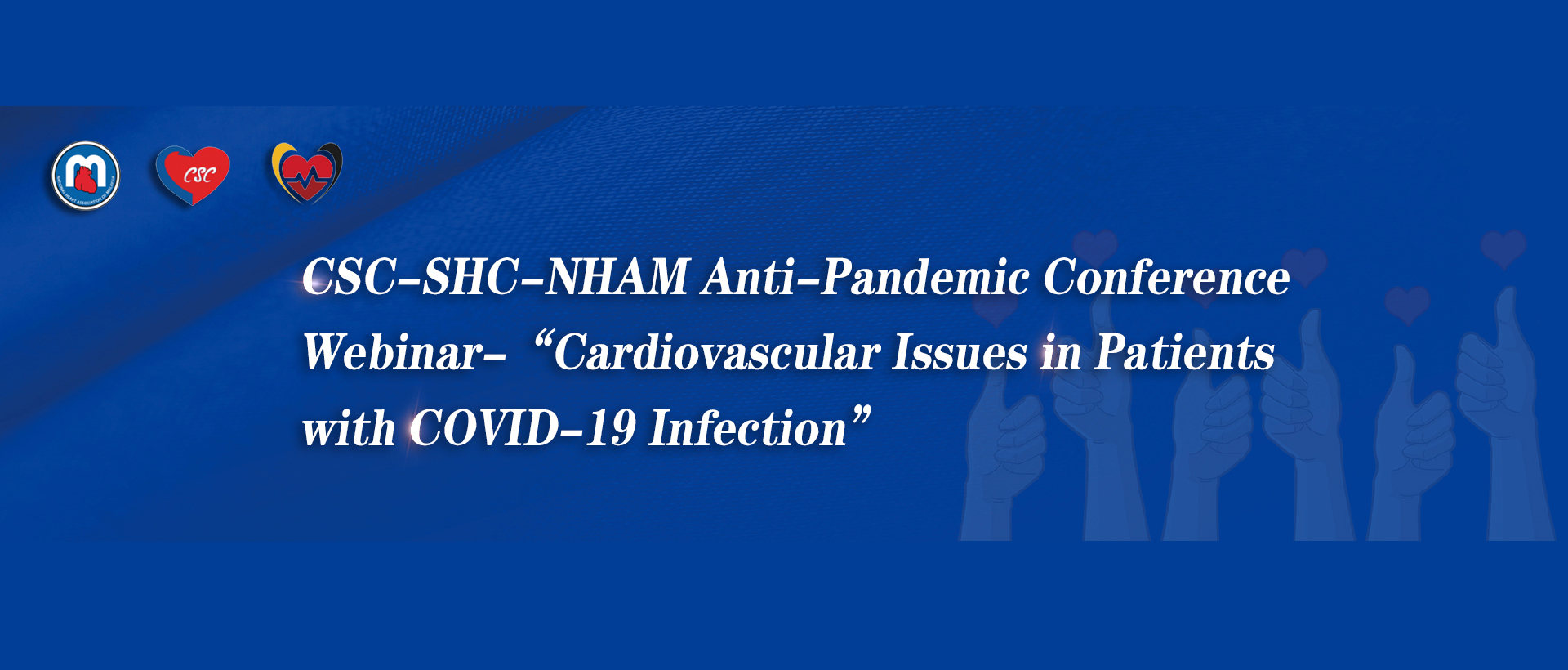
Management of Acute Myocardial Infarction During the COVID-19 Pandemic
COVID-19 and Thrombotic or Thromboembolic Disease: Implications for Prevention, Antithrombotic Therapy, and Follow-up
CSC Expert Consensus on Principles of Clinical Management of Patients with Severe Emergent Cardiovascular Diseases during the COVID-19 Epidemic
ACC Clinical Bulletin Focuses on Cardiac Implications of Coronavirus (COVID-19)
血流储备分数
Original Research2019 Apr 14;40(15):1188-1197.
JOURNAL:Eur Heart J. Article Link
Saw J, Starovoytov A, Humphries K et al. Keywords: Fibromuscular dysplasia (FMD); Myocardial infarction (MI); Percutaneous coronary intervention (PCI); Peripartum; Spontaneous coronary artery dissection (SCAD); Women
AIMS - Spontaneous coronary artery dissection (SCAD) was underdiagnosed and poorly understood for decades. It is increasingly recognized as an important cause of myocardial infarction (MI) in women. We aimed to assess the natural history of SCAD, which has not been adequately explored.
METHODS AND RESULTS - We performed a multicentre, prospective, observational study of patients with non-atherosclerotic SCAD presenting acutely from 22 centres in North America. Institutional ethics approval and patient consents were obtained. We recorded baseline demographics, in-hospital characteristics, precipitating/predisposing conditions, angiographic features (assessed by core laboratory), in-hospital major adverse events (MAE), and 30-day major adverse cardiovascular events (MACE). We prospectively enrolled 750 SCAD patients from June 2014 to June 2018. Mean age was 51.8 ± 10.2 years, 88.5% were women (55.0% postmenopausal), 87.7% were Caucasian, and 33.9% had no cardiac risk factors. Emotional stress was reported in 50.3%, and physical stress in 28.9% (9.8% lifting >50 pounds). Predisposing conditions included fibromuscular dysplasia 31.1% (45.2% had no/incomplete screening), systemic inflammatory diseases 4.7%, peripartum 4.5%, and connective tissue disorders 3.6%. Most were treated conservatively (84.3%), but 14.1% underwent percutaneous coronary intervention and 0.7% coronary artery bypass surgery. In-hospital composite MAE was 8.8%; peripartum SCAD patients had higher in-hospital MAE (20.6% vs. 8.2%, P = 0.023). Overall 30-day MACE was 8.8%. Peripartum SCAD and connective tissue disease were independent predictors of 30-day MACE.
CONCLUSION - Spontaneous coronary artery dissection predominantly affects women and presents with MI. Despite majority of patients being treated conservatively, survival was good. However, significant cardiovascular complications occurred within 30 days. Long-term follow-up and further investigations on management are warranted.
Published on behalf of the European Society of Cardiology. All rights reserved. © The Author(s) 2019. For permissions, please email: journals.permissions@oup.com.


 中 文
中 文




 CBS 2019
 CBS 2019 FACULTY
 Education Resource
 CBSMD Scientific Library


