CBS 2019


CBSMD教育中心


HOME


CBS 2019
At CBS


General Information
Association and Affiliations
Organized by
Nanjing Heart Center
Asian Bifurcation Club (ABC)
Nanjing First Hospital, Nanjing Medical University
Co-organized by
Chinese Society of Cardiology (CSC)
Capacity Building and Continuing Education Center,National Health and Family Planning Commission (CBCEC)
American Society for Cardiovascular Angiography and Interventions (SCAI)
Asian Heart Society (AHS)
Contact Us
Registration Administration of Domestic Representatives
Hongjuan Peng : +86-13913895477
Haimei Xu +86-13914736846
 cbsnj@cbsmd.cn
Registration Administration of Overseas Representatives
Ling Lin : +86 (25) 52271398
+86-13951884596
cbs@cbsmd.cn
Management of Challenging Cases
Yingying Zhao :+86-13815408517
sub@cbsmd.cn
Address
 CBS2019 Congress Secretariat, Nanjing First Hospital, Building No.9 68# Changle Road, Nanjing, China
 210006


FACULTY
FACULTY
General Chairman
Congress Chairman


Education Center
Education Center
• Online Education (For more customized user interface with self-defined collection of research papers and education resources.)
• CBS Education Resource


• CBSMD Scientific Library


SCIENTIFIC LIBRARY
SCIENTIFIC LIBRARY


Research Paper
> Acute Coronary Syndrom
> ASCVD Prevention
> Bifurcation Stenting
> Cardio-Oncology
> Congestive Heart Failure
> DAPT Duration
> Drug Coated Balloon
> Fractional Flow Reserve
> IVUS Guidance
> Optical Coherence Tomography
> Pulmonary Hypertension
> Rotational Atherectomy
> Shear Stress
> Stenting Left Main
> Transcatheter Aortic Valve Replacement
> Percutaneous LAA Occlusion
> Mitral/Tricuspid Valvular Disease
> Other Relevant Articles
Recommended Paper
Management of Acute Myocardial Infarction During the COVID-19 Pandemic
COVID-19 and Thrombotic or Thromboembolic Disease: Implications for Prevention, Antithrombotic Therapy, and Follow-up
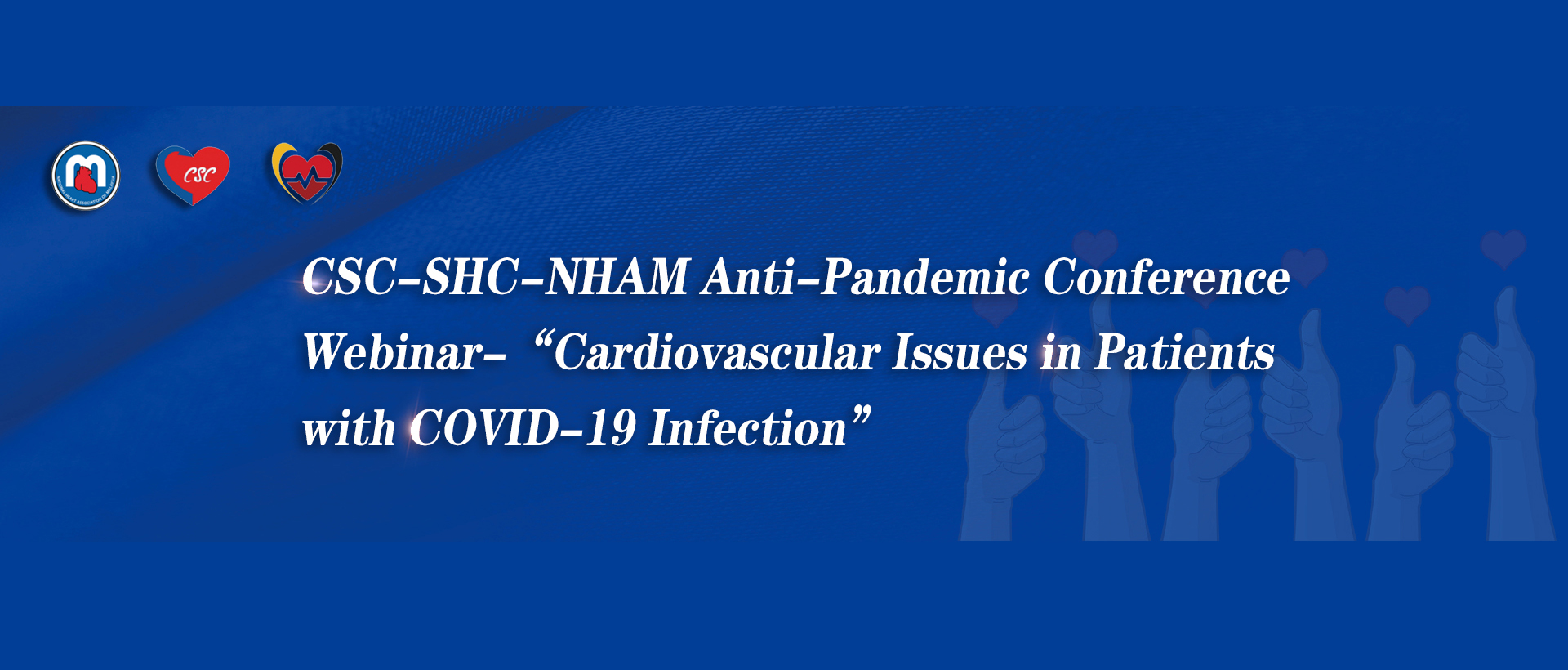
CSC Expert Consensus on Principles of Clinical Management of Patients with Severe Emergent Cardiovascular Diseases during the COVID-19 Epidemic
ACC Clinical Bulletin Focuses on Cardiac Implications of Coronavirus (COVID-19)
Other Relevant Articles
Original ResearchVolume 114, August 2021, Pages 11-24
JOURNAL:Trends Food Sci Technol. Article Link
Y Zhang, B Wernly, ZCh Zhou et al. Keywords: COVID-19; prevention; green tea; EGCG
BACKGROUND - The world is in the midst of the COVID-19 pandemic. In this comprehensive review, we discuss the potential protective effects of (−)-epigallocatechin-3-gallate (EGCG), a major constituent of green tea, against COVID-19.
SCOPE AND APPROACH - Information from literature of clinical symptoms and molecular pathology of COVID-19 as well as relevant publications in which EGCG shows potential protective activities against COVID-19 is integrated and evaluated.
KEY FINDINGS AND CONCLUSIONS - EGCG, via activating Nrf2, can suppress ACE2 (a cellular receptor for SARS-CoV-2) and TMPRSS2, which mediate cell entry of the virus. Through inhibition of SARS-CoV-2 main protease, EGCG may inhibit viral reproduction. EGCG via its broad antioxidant activity may protect against SARS-CoV-2 evoked mitochondrial ROS (which promote SARS-CoV-2 replication) and against ROS burst inflicted by neutrophil extracellular traps. By suppressing ER-resident GRP78 activity and expression, EGCG can potentially inhibit SARS-CoV-2 life cycle. EGCG also shows protective effects against 1) cytokine storm-associated acute lung injury/acute respiratory distress syndrome, 2) thrombosis via suppressing tissue factors and activating platelets, 3) sepsis by inactivating redox-sensitive HMGB1, and 4) lung fibrosis through augmenting Nrf2 and suppressing NF-κB. These activities remain to be further substantiated in animals and humans. The possible concerted actions of EGCG suggest the importance of further studies on the prevention and treatment of COVID-19 in humans. These results also call for epidemiological studies on potential preventive effects of green tea drinking on COVID-19.


 中 文




 CBS 2019
 CBS 2019 FACULTY
 Education Resource
 CBSMD Scientific Library


