CBS 2019


CBSMD教育中心


HOME


CBS 2019
At CBS


General Information
Association and Affiliations
Organized by
Nanjing Heart Center
Asian Bifurcation Club (ABC)
Nanjing First Hospital, Nanjing Medical University
Co-organized by
Chinese Society of Cardiology (CSC)
Capacity Building and Continuing Education Center,National Health and Family Planning Commission (CBCEC)
American Society for Cardiovascular Angiography and Interventions (SCAI)
Asian Heart Society (AHS)
Contact Us
Registration Administration of Domestic Representatives
Hongjuan Peng : +86-13913895477
Haimei Xu +86-13914736846
 cbsnj@cbsmd.cn
Registration Administration of Overseas Representatives
Ling Lin : +86 (25) 52271398
+86-13951884596
cbs@cbsmd.cn
Management of Challenging Cases
Yingying Zhao :+86-13815408517
sub@cbsmd.cn
Address
 CBS2019 Congress Secretariat, Nanjing First Hospital, Building No.9 68# Changle Road, Nanjing, China
 210006


FACULTY
FACULTY
General Chairman
Congress Chairman


Education Center
Education Center
• Online Education (For more customized user interface with self-defined collection of research papers and education resources.)
• CBS Education Resource


• CBSMD Scientific Library


SCIENTIFIC LIBRARY
SCIENTIFIC LIBRARY


Research Paper
> Acute Coronary Syndrom
> ASCVD Prevention
> Bifurcation Stenting
> Cardio-Oncology
> Congestive Heart Failure
> DAPT Duration
> Drug Coated Balloon
> Fractional Flow Reserve
> IVUS Guidance
> Optical Coherence Tomography
> Pulmonary Hypertension
> Rotational Atherectomy
> Shear Stress
> Stenting Left Main
> Transcatheter Aortic Valve Replacement
> Percutaneous LAA Occlusion
> Mitral/Tricuspid Valvular Disease
> Other Relevant Articles
Recommended Paper
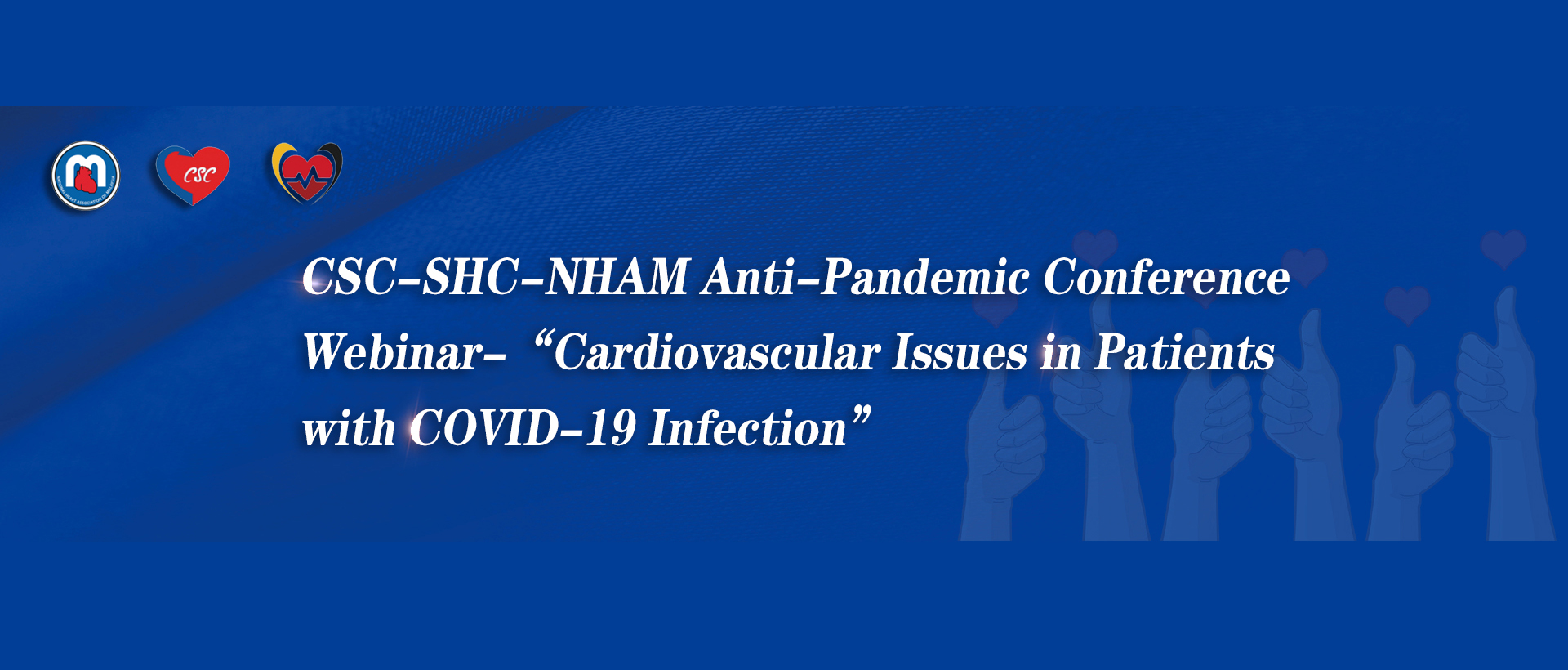
Management of Acute Myocardial Infarction During the COVID-19 Pandemic
COVID-19 and Thrombotic or Thromboembolic Disease: Implications for Prevention, Antithrombotic Therapy, and Follow-up
CSC Expert Consensus on Principles of Clinical Management of Patients with Severe Emergent Cardiovascular Diseases during the COVID-19 Epidemic
ACC Clinical Bulletin Focuses on Cardiac Implications of Coronavirus (COVID-19)
推荐文献
Original Research2019 Apr 26;214:1-8.
JOURNAL:Am Heart J. Article Link
Qintar M, Hirai T, Salisbury AC et al. Keywords: antianginal medication; de-escalation; CTO; outcome; angina; dyspnea
BACKGROUND - Successful chronic total occlusion (CTO) percutaneous coronary intervention (PCI) can markedly reduce angina symptom burden, but many patients often remain on multiple antianginal medications (AAMs) after the procedure. It is unclear when, or if, AAMs can be de-escalated to prevent adverse effects or limit polypharmacy. We examined the association of de-escalation of AAMs after CTO PCI with long-term health status.
METHODS - In a 12-center registry of consecutive CTO PCI patients, health status was assessed at 6 months after successful CTO PCI with the Seattle Angina Questionnaire and the Rose Dyspnea Scale. Among patients with technical CTO PCI success, we examined the association of AAM de-escalation with 6-month health status using multivariable models adjusting for revascularization completeness and predicted risk of post-PCI angina (using a validated risk model). We also examined predictors and variability of AAMs de-escalation.
RESULTS - Of 669 patients with technical success of CTO PCI, AAMs were de-escalated in 276 (35.9%) patients at 1 month. Patients with AAM de-escalation reported similar angina and dyspnea rates at 6 months compared with those whose AAMs were reduced (any angina: 22.5% vs 20%, P=.43; any dyspnea: 51.8% vs 50.1%, P=.40). In a multivariable model adjusting for complete revascularization and predicted risk of post-PCI angina, de-escalation of AAMs at 1 month was not associated with an increased risk of angina, dyspnea, or worse health status at 6 months.
CONCLUSIONS - Among patients with successful CTO PCI, de-escalation of AAMs occurred in about one-third of patients at 1 month and was not associated with worse long-term health status.
Copyright © 2019 Elsevier Inc. All rights reserved.


 中 文




 CBS 2019
 CBS 2019 FACULTY
 Education Resource
 CBSMD Scientific Library


