CBS 2019


CBSMD教育中心


HOME


CBS 2019
At CBS


General Information
Association and Affiliations
Organized by
Nanjing Heart Center
Asian Bifurcation Club (ABC)
Nanjing First Hospital, Nanjing Medical University
Co-organized by
Chinese Society of Cardiology (CSC)
Capacity Building and Continuing Education Center,National Health and Family Planning Commission (CBCEC)
American Society for Cardiovascular Angiography and Interventions (SCAI)
Asian Heart Society (AHS)
Contact Us
Registration Administration of Domestic Representatives
Hongjuan Peng : +86-13913895477
Haimei Xu +86-13914736846
 cbsnj@cbsmd.cn
Registration Administration of Overseas Representatives
Ling Lin : +86 (25) 52271398
+86-13951884596
cbs@cbsmd.cn
Management of Challenging Cases
Yingying Zhao :+86-13815408517
sub@cbsmd.cn
Address
 CBS2019 Congress Secretariat, Nanjing First Hospital, Building No.9 68# Changle Road, Nanjing, China
 210006


FACULTY
FACULTY
General Chairman
Congress Chairman


Education Center
Education Center
• Online Education (For more customized user interface with self-defined collection of research papers and education resources.)
• CBS Education Resource


• CBSMD Scientific Library


SCIENTIFIC LIBRARY
SCIENTIFIC LIBRARY


Research Paper
> Acute Coronary Syndrom
> ASCVD Prevention
> Bifurcation Stenting
> Cardio-Oncology
> Congestive Heart Failure
> DAPT Duration
> Drug Coated Balloon
> Fractional Flow Reserve
> IVUS Guidance
> Optical Coherence Tomography
> Pulmonary Hypertension
> Rotational Atherectomy
> Shear Stress
> Stenting Left Main
> Transcatheter Aortic Valve Replacement
> Percutaneous LAA Occlusion
> Mitral/Tricuspid Valvular Disease
> Other Relevant Articles
Recommended Paper
Management of Acute Myocardial Infarction During the COVID-19 Pandemic
COVID-19 and Thrombotic or Thromboembolic Disease: Implications for Prevention, Antithrombotic Therapy, and Follow-up
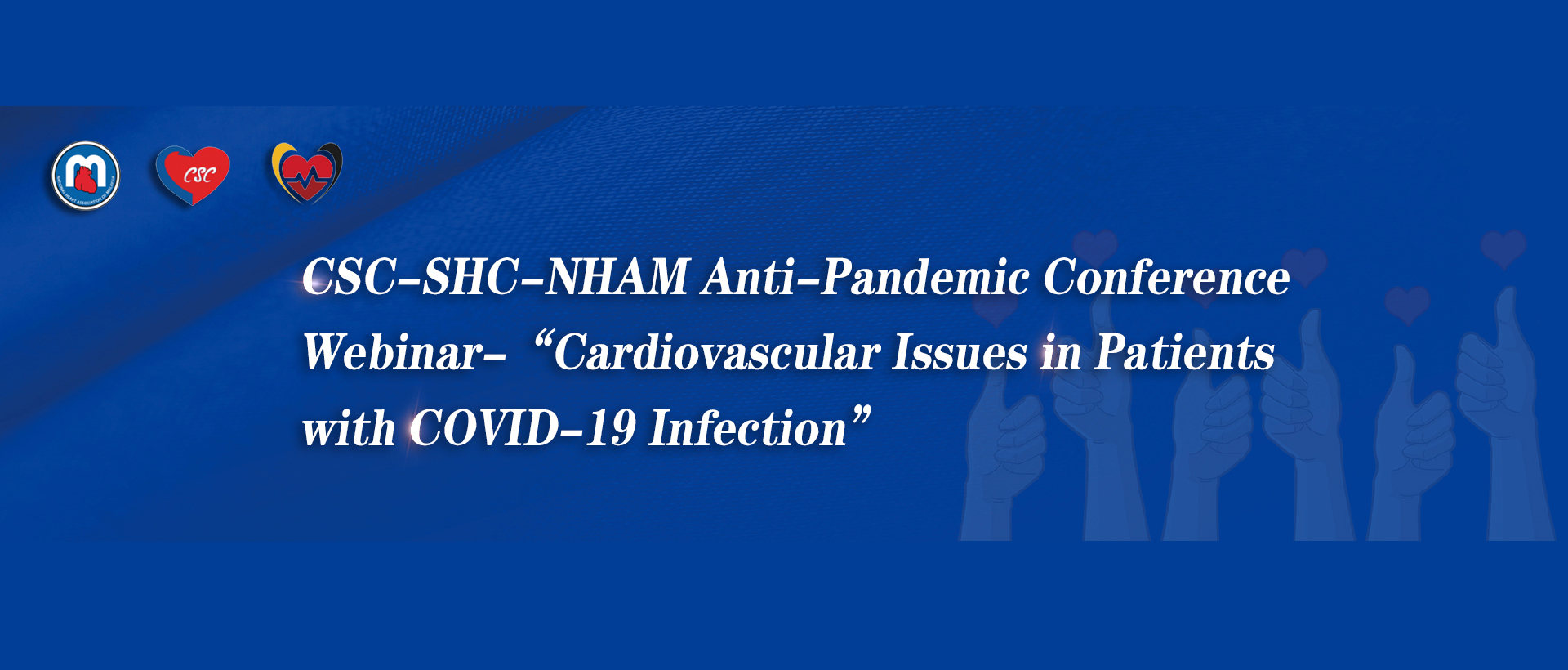
CSC Expert Consensus on Principles of Clinical Management of Patients with Severe Emergent Cardiovascular Diseases during the COVID-19 Epidemic
ACC Clinical Bulletin Focuses on Cardiac Implications of Coronavirus (COVID-19)
科学研究
JOURNAL:J Am Coll Cardiol. Article Link
Divakaran S, Loscalzo J et al. Keywords: angina; nitrate; nitrate-nitrite-NO pathway; nitric oxide; nitroglycerin; soluble guanylyl cyclase
The use of nitroglycerin in the treatment of angina pectoris began not long after its original synthesis in 1847. Since then, the discovery of nitric oxide as a biological effector and better understanding of its roles in vasodilation, cell permeability, platelet function, inflammation, and other vascular processes have advanced our knowledge of the hemodynamic (mostly mediated through vasodilation of capacitance and conductance arteries) and nonhemodynamic effects of organic nitrate therapy, via both nitric oxide-dependent and -independent mechanisms. Nitrates are rapidly absorbed from mucous membranes, the gastrointestinal tract, and the skin; thus, nitroglycerin is available in a number of preparations for delivery via several routes: oral tablets, sublingual tablets, buccal tablets, sublingual spray, transdermal ointment, and transdermal patch, as well as intravenous formulations. Organic nitrates are commonly used in the treatment of cardiovascular disease, but clinical data limit their use mostly to the treatment of angina. They are also used in the treatment of subsets of patients with heart failure and pulmonary hypertension. One major limitation of the use of nitrates is the development of tolerance. Although several agents have been studied for use in the prevention of nitrate tolerance, none are currently recommended owing to a paucity of supportive clinical data. Only 1 method of preventing nitrate tolerance remains widely accepted: the use of a dosing strategy that provides an interval of no or low nitrate exposure during each 24-h period. Nitric oxide's important role in several cardiovascular disease mechanisms continues to drive research toward finding novel ways to affect both endogenous and exogenous sources of this key molecular mediator.


 中 文
中 文




 CBS 2019
 CBS 2019 FACULTY
 Education Resource
 CBSMD Scientific Library


