CBS 2019


CBSMD教育中心


HOME


CBS 2019
At CBS


General Information
Association and Affiliations
Organized by
Nanjing Heart Center
Asian Bifurcation Club (ABC)
Nanjing First Hospital, Nanjing Medical University
Co-organized by
Chinese Society of Cardiology (CSC)
Capacity Building and Continuing Education Center,National Health and Family Planning Commission (CBCEC)
American Society for Cardiovascular Angiography and Interventions (SCAI)
Asian Heart Society (AHS)
Contact Us
Registration Administration of Domestic Representatives
Hongjuan Peng : +86-13913895477
Haimei Xu +86-13914736846
 cbsnj@cbsmd.cn
Registration Administration of Overseas Representatives
Ling Lin : +86 (25) 52271398
+86-13951884596
cbs@cbsmd.cn
Management of Challenging Cases
Yingying Zhao :+86-13815408517
sub@cbsmd.cn
Address
 CBS2019 Congress Secretariat, Nanjing First Hospital, Building No.9 68# Changle Road, Nanjing, China
 210006


FACULTY
FACULTY
General Chairman
Congress Chairman


Education Center
Education Center
• Online Education (For more customized user interface with self-defined collection of research papers and education resources.)
• CBS Education Resource


• CBSMD Scientific Library


SCIENTIFIC LIBRARY
SCIENTIFIC LIBRARY


Research Paper
> Acute Coronary Syndrom
> ASCVD Prevention
> Bifurcation Stenting
> Cardio-Oncology
> Congestive Heart Failure
> DAPT Duration
> Drug Coated Balloon
> Fractional Flow Reserve
> IVUS Guidance
> Optical Coherence Tomography
> Pulmonary Hypertension
> Rotational Atherectomy
> Shear Stress
> Stenting Left Main
> Transcatheter Aortic Valve Replacement
> Percutaneous LAA Occlusion
> Mitral/Tricuspid Valvular Disease
> Other Relevant Articles
Recommended Paper
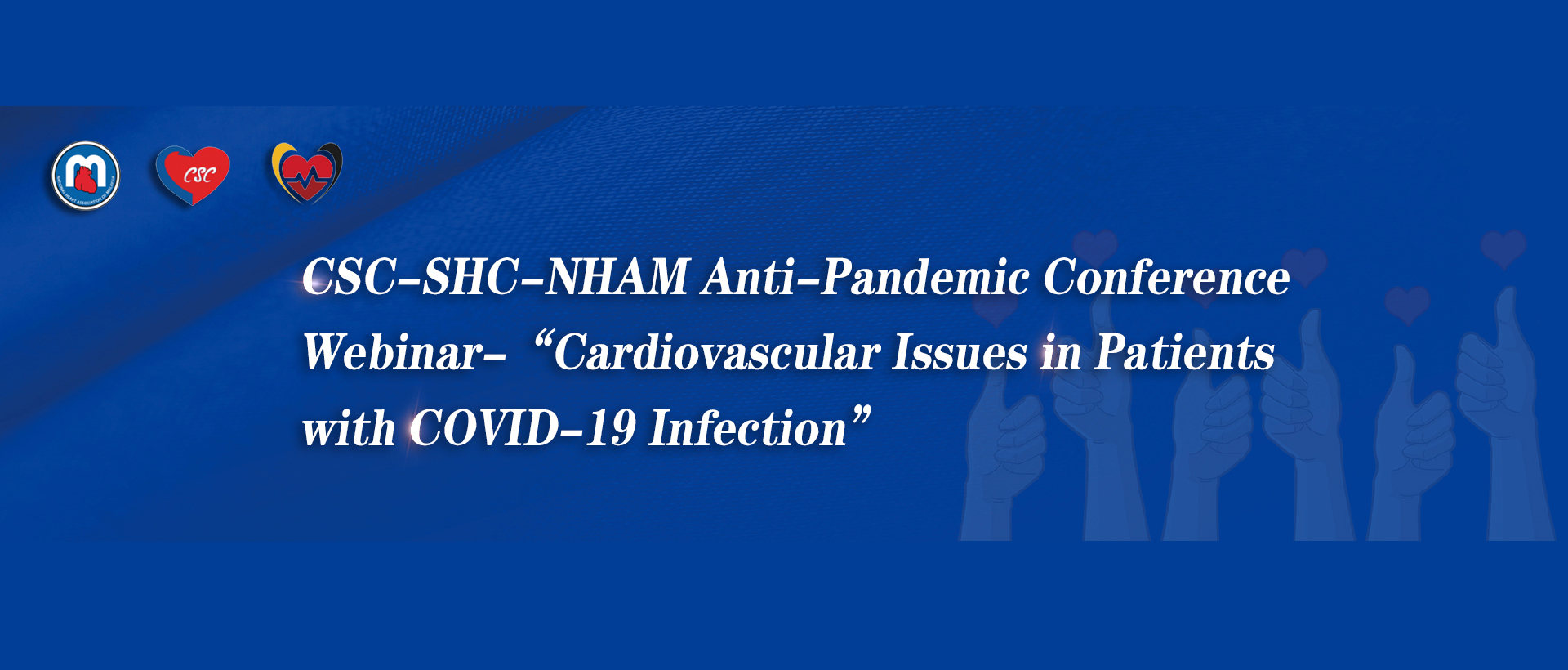
Management of Acute Myocardial Infarction During the COVID-19 Pandemic
COVID-19 and Thrombotic or Thromboembolic Disease: Implications for Prevention, Antithrombotic Therapy, and Follow-up
CSC Expert Consensus on Principles of Clinical Management of Patients with Severe Emergent Cardiovascular Diseases during the COVID-19 Epidemic
ACC Clinical Bulletin Focuses on Cardiac Implications of Coronavirus (COVID-19)
急性冠脉综合征
Original Research2017 Dec;10(12).
JOURNAL:Circ Cardiovasc Interv. Article Link
Watt J, Austin D, Mackay D et al. Keywords: access site; atherectomy; hemorrhage; radial artery
BACKGROUND - Rotational atherectomy (RA) is an important interventional tool for heavily calcified coronary lesions. We compared the early clinical outcomes in patients undergoing RA using radial or femoral access.
METHODS AND RESULTS - We identified all patients in England and Wales who underwent RA between January 1, 2005, and March 31, 2014. Eight thousand six hundred twenty-two RA cases (3069 radial and 5553 femoral) were included in the analysis. The study primary outcome was 30-day mortality. Propensity scores were calculated to determine the factors associated with treatment assignment to radial or femoral access. Multivariable logistic regression analysis, using the calculated propensity scores, was performed. Thirty-day mortality was 2.2% in the radial and 2.3% in the femoral group (P=0.76). Radial access was associated with equivalent 30-day mortality (adjusted odds ratio [OR], 1.06; 95% confidence interval [CI], 0.77-1.46; P=0.71), procedural success (OR, 1.04; 95% CI, 0.84-1.29; P=0.73), major adverse cardiac and cerebrovascular events (OR, 1.05; 95% CI, 0.80-1.38; P=0.72), and net adverse clinical events (OR, 0.90; 95% CI, 0.71-1.15; P=0.41), but lower rates of in-hospital major bleeding (OR, 0.62; 95% CI, 0.40-0.98; P=0.04) and major access site complications (OR, 0.05; 95% CI, 0.01-0.38; P=0.004), compared with femoral access.
CONCLUSIONS - In this large real-world study of patients undergoing RA, radial access was associated with equivalent 30-day mortality and procedural success, but reduced major bleeding and access site complications, compared with femoral access.
© 2017 American Heart Association, Inc.


 中 文
中 文




 CBS 2019
 CBS 2019 FACULTY
 Education Resource
 CBSMD Scientific Library


