CBS 2019


CBSMD教育中心


HOME


CBS 2019
At CBS


General Information
Association and Affiliations
Organized by
Nanjing Heart Center
Asian Bifurcation Club (ABC)
Nanjing First Hospital, Nanjing Medical University
Co-organized by
Chinese Society of Cardiology (CSC)
Capacity Building and Continuing Education Center,National Health and Family Planning Commission (CBCEC)
American Society for Cardiovascular Angiography and Interventions (SCAI)
Asian Heart Society (AHS)
Contact Us
Registration Administration of Domestic Representatives
Hongjuan Peng : +86-13913895477
Haimei Xu +86-13914736846
 cbsnj@cbsmd.cn
Registration Administration of Overseas Representatives
Ling Lin : +86 (25) 52271398
+86-13951884596
cbs@cbsmd.cn
Management of Challenging Cases
Yingying Zhao :+86-13815408517
sub@cbsmd.cn
Address
 CBS2019 Congress Secretariat, Nanjing First Hospital, Building No.9 68# Changle Road, Nanjing, China
 210006


FACULTY
FACULTY
General Chairman
Congress Chairman


Education Center
Education Center
• Online Education (For more customized user interface with self-defined collection of research papers and education resources.)
• CBS Education Resource


• CBSMD Scientific Library


SCIENTIFIC LIBRARY
SCIENTIFIC LIBRARY


Research Paper
> Acute Coronary Syndrom
> ASCVD Prevention
> Bifurcation Stenting
> Cardio-Oncology
> Congestive Heart Failure
> DAPT Duration
> Drug Coated Balloon
> Fractional Flow Reserve
> IVUS Guidance
> Optical Coherence Tomography
> Pulmonary Hypertension
> Rotational Atherectomy
> Shear Stress
> Stenting Left Main
> Transcatheter Aortic Valve Replacement
> Percutaneous LAA Occlusion
> Mitral/Tricuspid Valvular Disease
> Other Relevant Articles
Recommended Paper
Management of Acute Myocardial Infarction During the COVID-19 Pandemic
COVID-19 and Thrombotic or Thromboembolic Disease: Implications for Prevention, Antithrombotic Therapy, and Follow-up
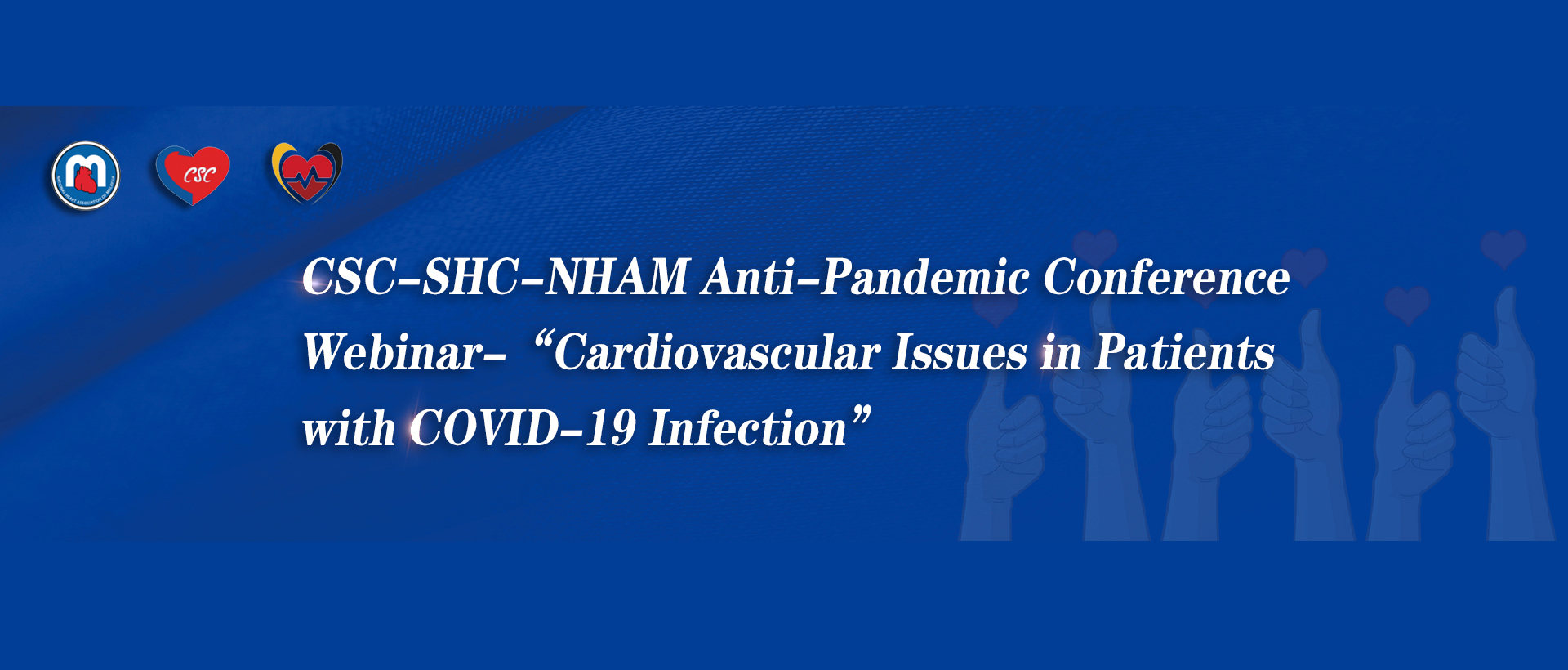
CSC Expert Consensus on Principles of Clinical Management of Patients with Severe Emergent Cardiovascular Diseases during the COVID-19 Epidemic
ACC Clinical Bulletin Focuses on Cardiac Implications of Coronavirus (COVID-19)
肺动脉高压
Original Research2019 Apr 10. [Epub ahead of print]
JOURNAL:Nature. Article Link
Schiattarella GG, Altamirano F, Hill JA et al. Keywords: HFpEF; iNOS-driven dysregulation; IRE1α-XBP1 pathway; mechanism of cardiomyocyte dysfunction
Heart failure with preserved ejection fraction (HFpEF) is a common syndrome with high morbidity and mortality for which there are no evidence-based therapies. Here we report that concomitant metabolic and hypertensive stress in mice-elicited by a combination of high-fat diet and inhibition of constitutive nitric oxide synthase using Nω-nitro-L-arginine methyl ester (L-NAME)-recapitulates the numerous systemic and cardiovascular features of HFpEF in humans. Expression of one of the unfolded protein response effectors, the spliced form of X-box-binding protein 1 (XBP1s), was reduced in the myocardium of our rodent model and in humans with HFpEF. Mechanistically, the decrease in XBP1s resulted from increased activity of inducible nitric oxide synthase (iNOS) and S-nitrosylation of the endonuclease inositol-requiring protein 1α (IRE1α), culminating in defective XBP1 splicing. Pharmacological or genetic suppression of iNOS, or cardiomyocyte-restricted overexpression of XBP1s, each ameliorated the HFpEF phenotype. We report that iNOS-driven dysregulation of the IRE1α-XBP1 pathway is a crucial mechanism of cardiomyocyte dysfunction in HFpEF.


 中 文
中 文




 CBS 2019
 CBS 2019 FACULTY
 Education Resource
 CBSMD Scientific Library


