CBS 2019


CBSMD教育中心


首页


CBS 2019
关于CBS


会议通知
会议组织
主办单位
南京市心血管病医院
亚洲分叉病变俱乐部
南京医科大学附属南京医院
南京市第一医院医学发展医疗救助基金会
协办单位
中华医学会心血管病学分会
国家卫生健康委能力建设和继续教育心血管病学专家委员会(CBCEC)
美国心血管造影和介入学会
亚洲心脏学会
北京合众关爱心脏健康基金会
联系我们
境内代表注册管理:
彭红娟 : +86-13913895477
徐海梅 :+86-13914736846
 cbsnj@cbsmd.cn
境外代表注册管理:
林玲 : +86 (25) 52271398
+86-13951884596
cbs@cbsmd.cn
病例征集管理:
赵莹莹 :+86-13815408517
sub@cbsmd.cn
地址:
 江苏省南京市秦淮区长乐路68号,南京市心血管病医院9号楼905区心内科办公室
 210006


主席团
主席团
大会主席
联合主席


教育中心
教育中心
• 线上教育 ( 注册后可使用个人定义界面搜集科研图书馆文献、下载教育资源、参与在线病例讨论。)
• 教育资源


• 科研动态


科研图书馆
科研图书馆

科研文章
> 急性冠脉综合征
> 动脉粥样硬化性心血管疾病
> 分叉支架
> 心脏肿瘤科
> 充血性心力衰竭
> 双重抗血小板治疗持续时间
> 药物涂层球囊
> 血流储备分数
> 血管内超声指导
> 光学相关断层扫描
> 肺动脉高压
> 旋磨术
> 血流动力学与动脉粥样硬化
> 左主干支架
> 经导管主动脉瓣置换
> 经皮左心耳封堵
> 二尖瓣/三尖瓣瓣膜
> 推荐文献
荐读文献
Management of Acute Myocardial Infarction During the COVID-19 Pandemic
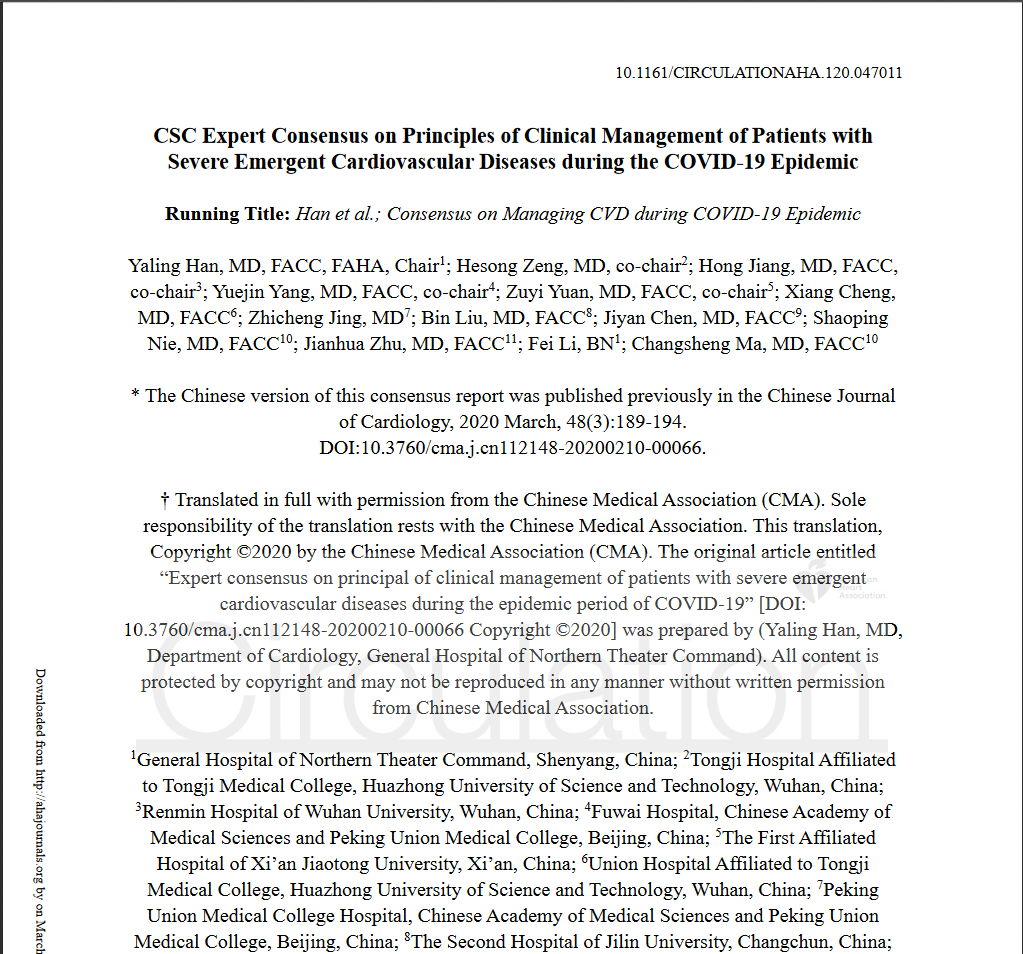
CSC Expert Consensus on Principles of Clinical Management of Patients with Severe Emergent Cardiovascular Diseases during the COVID-19 Epidemic
ACC临床简报:新型冠状病毒对心脏的影响(2019-nCoV)
SCAI Expert Consensus Statement Update on Best Practices for Transradial Angiography and Intervention
急性冠脉综合征
Original Researche13197, 2019 Dec 27 [Online ahead of print]
JOURNAL:Eur J Clin Invest. Article Link
MX Chen, J Kan, JJ Zhang et al. Keywords: STEMI; clinical events; in-hospital death; PCI; trained operator
BACKGROUND - Reports showed no change of 7‐day mortality after primary percutaneous coronary intervention (PCI) for ST‐elevation myocardial infarction (STEMI) between 2001 and 2011 in China. National rolling one‐year interventional standardized training program began in September 2009. However, the improvement in clinical outcome following STEMI PCI after 2011 remains unclear.
METHODS AND RESULTS - This multicenter MOODY registry study aimed to analyze the clinical improvement after STEMI PCI. Of a total of 9265 acute MI patients registered from 24 centers, 3142 STEMIs having a first medical contact time ≤12 hours and undergoing primary PCI were assigned to the Pre Group (n=1014, between March 1999 and October 2010) or the Post Group (n=2128, between 2010 November and 2016 Ocotber). The primary endpoint was in‐hospital cardiac death. Study endpoints were also compared between trained and untrained operators and between experienced (≥ 50 primary PCIs/year) and inexperienced personnel.
In‐hospital death after PCI was 3.0% in the Pre Group, significantly higher than 1.6% in the Post Group (p=0.035). The improvements in clinical outcome after PCI between the 2016 and Pre Groups were stably sustained through one‐year follow‐up. The significant reduction for in‐hospital death was noted when primary PCI was performed by trained (1.4% vs 5.4%, p<0.001) or experienced (2.7% vs 4.8%, p=0.001) operators, compared to untrained or inexperienced operators, respectively. Inclusion of the untrained operator into the conventional risk model strongly enhanced the prediction for endpoints. Age, Killip Class 3, diabetes, trans‐radial approach, and system delay were five predictors of in‐hospital death after primary PCI.
CONCLUSION - PCI for STEMI by a trained and experienced operator was associated with significant reduction of in‐hospital death. Our results strongly warrant the need for promoting the current system response and patient education.


 English




 CBS 2019
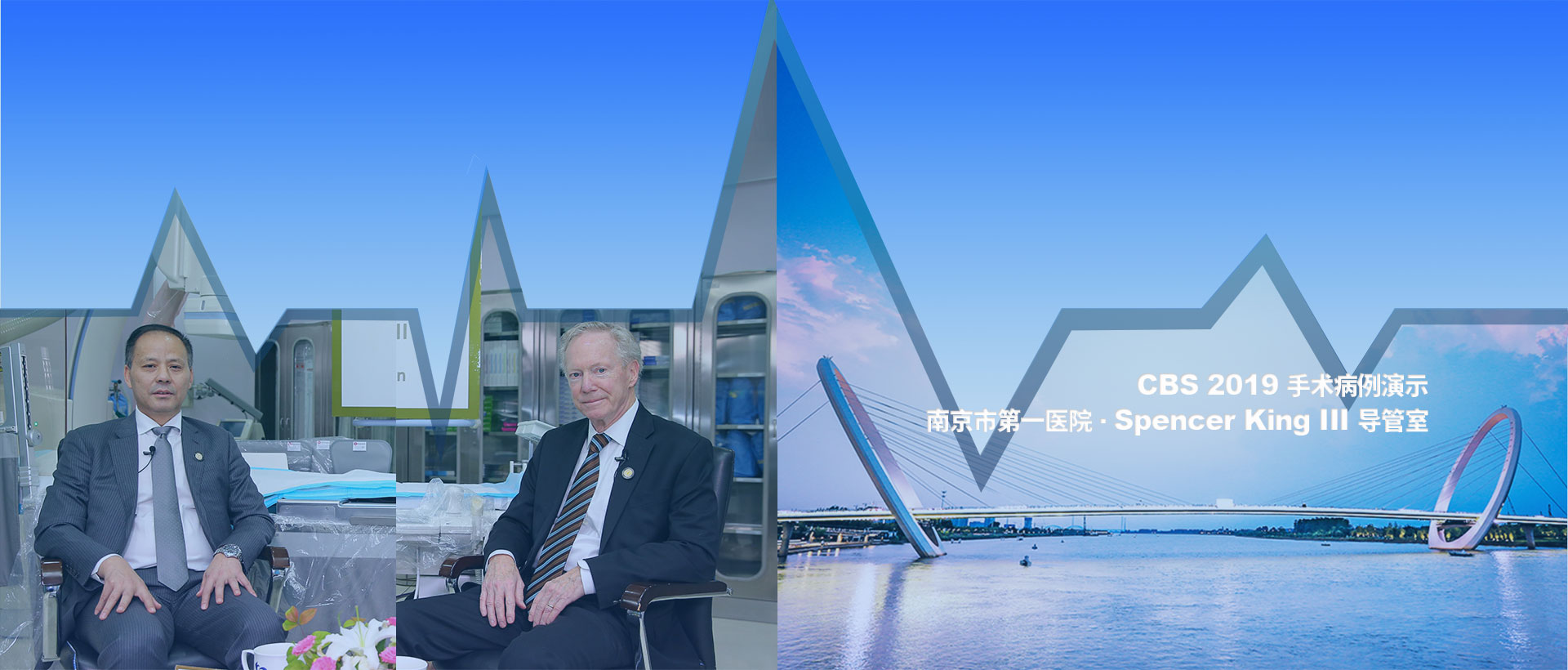
 CBS 2019 主席团
 教育中心
 科研动态


