CBS 2019


CBSMD教育中心


首页


CBS 2019
关于CBS


会议通知
会议组织
主办单位
南京市心血管病医院
亚洲分叉病变俱乐部
南京医科大学附属南京医院
南京市第一医院医学发展医疗救助基金会
协办单位
中华医学会心血管病学分会
国家卫生健康委能力建设和继续教育心血管病学专家委员会(CBCEC)
美国心血管造影和介入学会
亚洲心脏学会
北京合众关爱心脏健康基金会
联系我们
境内代表注册管理:
彭红娟 : +86-13913895477
徐海梅 :+86-13914736846
 cbsnj@cbsmd.cn
境外代表注册管理:
林玲 : +86 (25) 52271398
+86-13951884596
cbs@cbsmd.cn
病例征集管理:
赵莹莹 :+86-13815408517
sub@cbsmd.cn
地址:
 江苏省南京市秦淮区长乐路68号,南京市心血管病医院9号楼905区心内科办公室
 210006


主席团
主席团
大会主席
联合主席


教育中心
教育中心
• 线上教育 ( 注册后可使用个人定义界面搜集科研图书馆文献、下载教育资源、参与在线病例讨论。)
• 教育资源


• 科研动态


科研图书馆
科研图书馆


科研文章
> 急性冠脉综合征
> 动脉粥样硬化性心血管疾病
> 分叉支架
> 心脏肿瘤科
> 充血性心力衰竭
> 双重抗血小板治疗持续时间
> 药物涂层球囊
> 血流储备分数
> 血管内超声指导
> 光学相关断层扫描
> 肺动脉高压
> 旋磨术
> 血流动力学与动脉粥样硬化
> 左主干支架
> 经导管主动脉瓣置换
> 经皮左心耳封堵
> 二尖瓣/三尖瓣瓣膜
> 推荐文献
荐读文献
Management of Acute Myocardial Infarction During the COVID-19 Pandemic
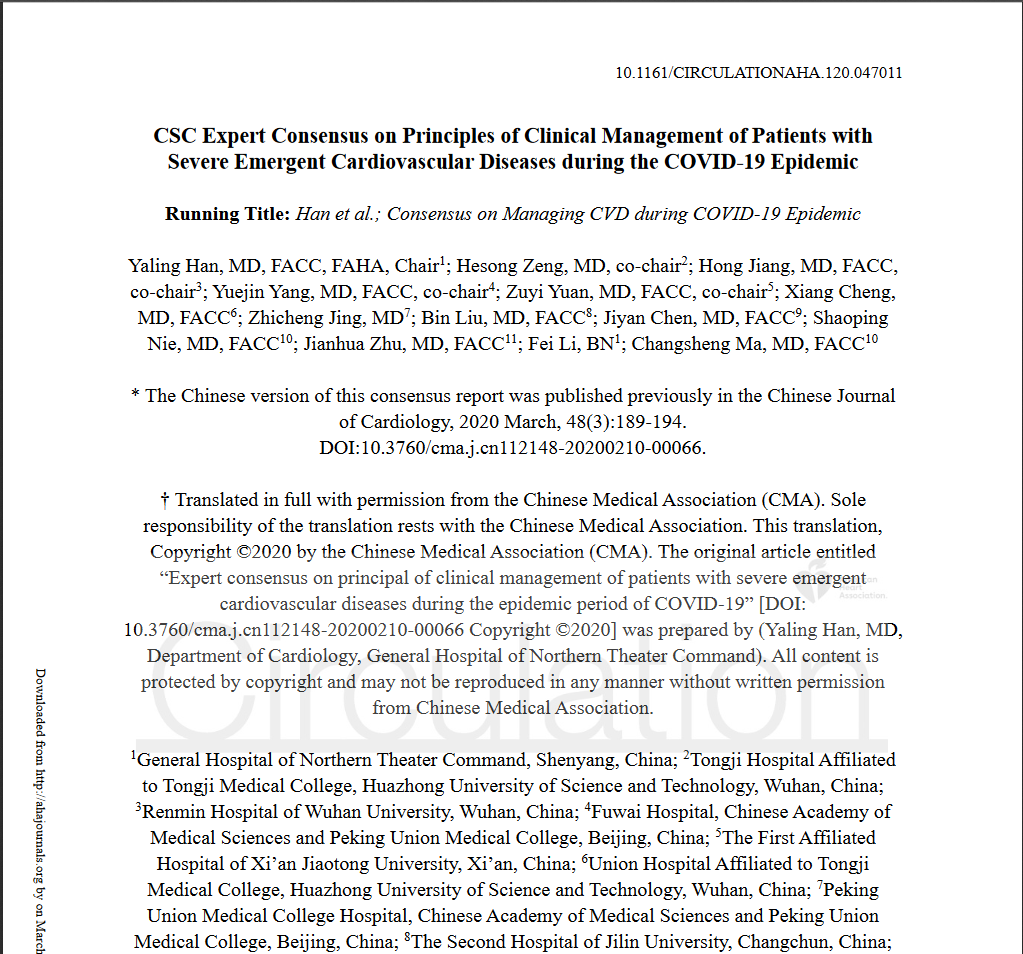
CSC Expert Consensus on Principles of Clinical Management of Patients with Severe Emergent Cardiovascular Diseases during the COVID-19 Epidemic
ACC临床简报:新型冠状病毒对心脏的影响(2019-nCoV)
SCAI Expert Consensus Statement Update on Best Practices for Transradial Angiography and Intervention
肺动脉高压
Expert Opinion
JOURNAL:ACC Article Link
François Potus, PhD; Stephen L. Archer, MD, FACC
Quick Takes
The Genetic Basis for PAH - PAH is a lethal vasculopathy characterized by increased mean pulmonary arterial pressure above 20 mmHg and pulmonary vascular resistance > 3 Wood units1 in the absence of left heart disease, chronic lung disease and hypoxia, or thromboembolic disease. The etiology of the disease is heterogenous and remains poorly understood, although it is characterized by increased inflammation, fibrosis and impaired angiogenesis, and disordered mitochondrial metabolism and dynamics. Approximately 7% of PAH cases are familial. By far the most common gene mutations in patients with PAH are heterozygous germline mutations in the bone morphogenetic protein receptor 2 gene, BMPR2, although 16 other PAH genes have been identified.2 Gene mutations, including mutations of the genes ACVRL1, ENG, CAV1, KCNK3, and EIF2AK4, occur in under 15% of patients with idiopathic PAH and are rare in PAH associated with connective tissue diseases (associated PAH). In addition to genetic causes of PAH, epigenetic dysregulation of gene expression has emerged as a critical player of PAH development and progression.
PAH and Epigenetics - Epigenetics is defined as a change in gene expression that occurs without alteration in the DNA sequence and underlies most gene-environment interactions. There are three major mechanisms by which epigenetic regulation changes gene expression, including histone modifications (e.g., acetylation and methylation), non-coding RNA (microRNA and long non-coding RNA), and DNA methylation.3 DNA methylation is a mechanism by which cells or organisms adapt gene expression in response to their environment, including pathological or physiologic stressors (such as inflammation), metabolic changes, and/or hypoxia. DNA methylation is mediated by the addition of methyl groups on DNA nucleotides, mainly in CpG islands, which are regions of the DNA rich in cytosine and guanine. DNA methylation in promoter and enhancer regions impairs access to transcription factors and other regulatory proteins and in general impairs gene expression. DNA methylation is a dynamic process that reflects the balance between the activity of DNA methyltransferases (a family of enzymes that add methyl groups in CpG islands) and TET enzymes, which remove these methyl groups.
PAH and DNA Methylation - Our group and others have identified an important contribution of DNA methylation in PAH, relevant to the development of both pulmonary vascular disease and right ventricular (RV) failure. In experimental models of PAH, we reported that DNA hypermethylation decreases superoxide dismutase 2 gene expression leading to normoxic activation of hypoxia-inducible transcription factor-1alpha, through a redox mechanism.4 The resulting pseudohypoxic environment leads to metabolic dysfunction and results in smooth muscle cell proliferation and apoptosis resistance. Conversely, treatment with 5-azacytidine, a DNA methyltransferase inhibitor, leads to high expression of superoxide dismutase 2 and reduces proliferation of smooth muscle cells. The increased DNA methyltransferase activity relates to tissue-specific upregulation of several DNA methyltransferase isoforms in pulmonary vascular cells. Supporting this observation, we demonstrated that RV fibroblasts extracted from a preclinical model of PAH with RV failure are hyper-methylated, and we have demonstrated that this leads to their hyperproliferative and pro-fibrotic phenotype in vitro.5 We also reported that increased DNA methylation is associated with angiogenic defects observed in decompensated RV from patients with PAH.6 In vitro, hydralazine (an antihypertensive agent used to treat heart failure that is also a hypomethylating agent) restores the angiogenic potential of endothelial cells isolated from the decompensated RV in PAH. This is a reminder that epigenetic abnormalities may be particularly amenable to therapy because genes that are silenced by methylation can be reactivated by demethylation.
Genetic and Epigenetic - Our recent work suggests that the separation of genetic and epigenetic mechanisms is arbitrary in PAH.7 Both mutations and impaired epigenetic regulation of a single pathway can occur in patients with PAH. Using the largest PAH patient cohort that exists to date worldwide (the National Biological Sample and Data Repository for Pulmonary Arterial Hypertension, or PAH Biobank; 2,572 cases), our team described a genetic association of germline and somatic mutations of the TET2 gene in patients with idiopathic and associated PAH. TET2 mutation occurs in 0.39% of the patients with PAH, with 75% of the mutations being germline and 25% of the mutations being somatic. There was a significant increase in the expression of loss-of-function variants in TET2 in patients with PAH compared with control subjects. Moreover, TET2 mutation is associated with sixfold increase in the relative risk to develop PAH compared with the Genome Aggregation Database control group. Patients carrying a TET2 mutation lacked a positive response to acute vasodilator challenge, which is a marker of poor prognosis. Among the TET family of genes, TET2 is most critical to the DNA demethylation process.8 In an independent cohort of 140 patients within this study, we reported that circulating TET2 expression was decreased in >86% of patients with PAH (both idiopathic PAH and PAH associated with connective tissue disease) compared to healthy control subjects. Thus, although the gene mutation was rare, the epigenetic downregulation of the TET2 expression was common. Finally, to confirm the biologic plausibility of TET2 mutations as a cause of PAH, we generated a conditional TET2 knockout mouse and demonstrated that it spontaneously developed PAH as it aged, characterized by increased mean pulmonary arterial pressure, adverse pulmonary vascular remodeling, and decreased lung perfusion.
Our early preliminary and unpublished data suggest that PAH is also associated with an increased burden of rare, predicted damaging mutation in a gene, DNA methyltransferase 3A (DNMT3A). DNMT3A is also involved in the regulation of DNA methylation. A sub-cohort analysis reveals that DNMT3A mutation might be preferentially associated with PAH associated with connective tissue disease rather than idiopathic PAH, although this reflects research in progress in our group. As with TET2, we reported a ubiquitous decrease of DNMT3A expression in the blood of both patients with idiopathic PAH and patients with PAH associated with connective tissue disease compared to healthy controls, a reminder that epigenetic regulation of an epigenetic gene regulator is much more common than a mutation in the same gene, though both are associated with increased risk of developing PAH.
A Step Toward Personalized Medicine - Aside from being a critical factor involved in the regulation of DNA methylation processes, TET2 also contributes to the regulation of inflammation.9 Several studies demonstrated that TET2 depletion leads to a pro-inflammatory phenotype.10 Corroborating this observation, we reported that TET2 mutation is associated with increased levels of pro-inflammatory cytokines (e.g., interleukin-1-beta [IL-1b]) in the blood of patients with PAH compared to both non-mutated and healthy controls. We also observed an increased expression of inflammatory markers in the blood of TET2 mutated mice, with IL-1b being the most over-expressed cytokine (compared to non-mutated mice). Thus, our data demonstrated that TET2 mutation/depletion is associated with increased inflammation in both mice and patients with PAH. CANTOS (Canakinumab Anti-inflammatory Thrombosis Outcome Study),11 which investigated the effect of a monoclonal antibody targeting IL-1b (canakinumab) in cardiovascular diseases, identified the presence of clonal hematopoiesis of indeterminate potential (involving TET2 mutation) in 8.8% of the cohort. Patients with a somatic mutations in TET2 showed a greater magnitude of risk for major adverse cardiovascular events; however, they also displayed an improved therapeutic response to canakinumab.12 Similarly, we reported that the murine version of canakinumab prevents PAH development (decreased mean pulmonary arterial pressure and adverse pulmonary vascular remodeling) in our TET2 mutated mice.7 Thus, we speculate that TET2 mutation might be a useful predictor of a positive response to anti-inflammatory therapy in PAH, although confirmation of this hypothesis would be required.
Clonal Hematopoiesis of Indeterminate Potential and PAH - Clonal hematopoiesis of indeterminate potential is a common, age-related phenomenon in which somatic mutations of several genes, including TET2 and DNMT3A, in blood cell progenitors contribute to the formation of genetically distinct subpopulations of clonally abnormal blood cells.13 Besides increasing the risk of hematologic cancer, clonal hematopoiesis of indeterminate potential is associated with an increased risk of coronary heart disease, myocardial infarction, and death.14-16 Although our published7 and preliminary data (increased burden of TET2 and DNMT3A somatic and germline deleterious mutation in PAH blood) suggest a potential association between clonal hematopoiesis of indeterminate potential and PAH, further studies are underway to confirm this speculation.
In conclusion, our international team of clinical PAH specialists Dr. Archer and Dr. Hassoun, hematologist Dr. Rauh, biobanking expert Dr. Pauciulo, physiologist Dr. Tian, molecular biologist Dr. Lima, and geneticists Dr. Chung and Dr. Nichols used a translational approach to demonstrate the association between deleterious mutations in genes involved in the regulation of DNA methylation and PAH development. We identified novel concepts regarding the potential genetic control of epigenetics dysfunction in PAH that suggest a contribution of clonal hematopoiesis of indeterminate potential in the development of PAH and a related role for anti-inflammatory therapies. Further studies are needed to understand the broader role of clonal hematopoiesis of indeterminate potential in PAH.
REFERENCES


 English









 CBS 2019
 CBS 2019 主席团
 教育中心
教育中心 科研动态
科研动态


